
Roof Ventilation in Northern Virginia: Why Your Attic May Be Damaging Your Roof
Poor attic ventilation can silently damage your roof by trapping heat and moisture — baking shingles from beneath, shortening roof lifespan, causing ice dams, promoting mold and rot, and raising energy bills.
Quick Answer: The 90-Second Summary
- Poor attic ventilation traps heat and moisture, damaging a roof from the inside out.
- It bakes shingles from beneath in summer and causes ice dams in winter.
- It promotes mold, mildew, and wood rot in the decking and framing.
- It shortens roof lifespan, raises energy bills, and can void your warranty.
- For balanced soffit and ridge ventilation, call Sam Construction Group USA: (571) 294-4977.
What Is Proper Roof Ventilation?
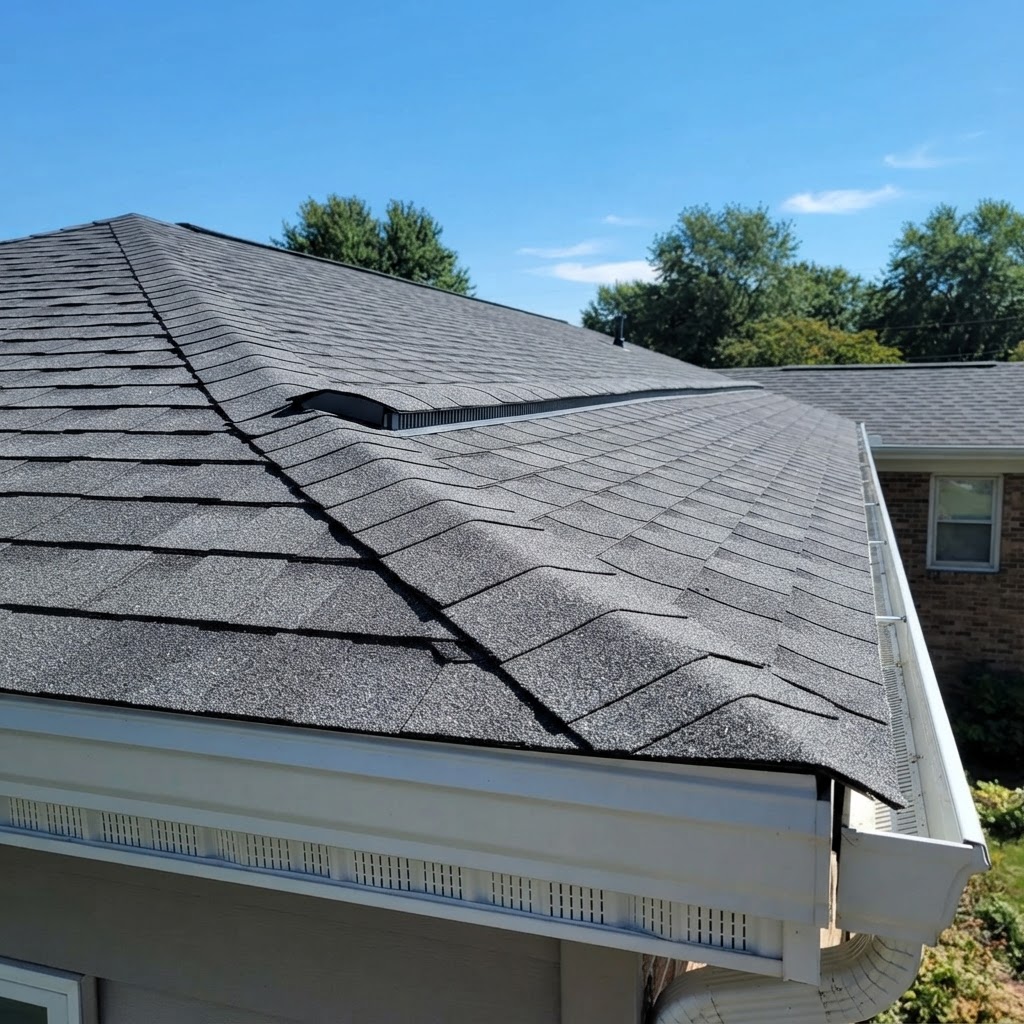
Roof ventilation is a balanced system that lets air flow through the attic — cool air entering low through soffit vents at the eaves (intake), and warm, moist air exiting high through ridge vents near the peak (exhaust). This continuous airflow keeps the attic and roof deck dry and temperature-regulated. A balance of intake and exhaust is essential; too much or too little of either undermines the whole system.
How Poor Attic Ventilation Damages Your Roof
- It bakes shingles from beneath. In Northern Virginia’s hot, humid summers, an unventilated attic becomes superheated, cooking the shingles from underneath and causing them to age prematurely, curl, and crack — significantly shortening roof lifespan.
- It causes ice dams in winter. During NoVA’s freeze-thaw winters, escaping attic heat melts snow that refreezes at the cold eaves, forming an ice dam that forces water up under the shingles and into the home. Proper ventilation keeps the roof deck cold and even.
- It traps attic moisture, causing mold and rot. Poor ventilation lets humidity and condensation build up, leading to mold, mildew, and wood rot in the decking and framing.
- It shortens your roof’s lifespan. The combined effect of trapped heat and moisture means a poorly ventilated roof simply doesn’t last as long.
- It raises energy bills. A superheated attic forces your air conditioning to work harder, driving up cooling costs and making upstairs rooms uncomfortable.
- It can void your warranty. Many shingle manufacturers require adequate ventilation for warranty coverage.
Signs of Poor Attic Ventilation
- Excessive heat in the attic or upstairs rooms
- Attic moisture, condensation, or frost
- Mold or mildew on attic surfaces
- Ice dams at the roof edge in winter
- Prematurely curling or aging shingles
- Higher-than-expected energy bills
- A hot, stuffy second floor
The Role of Soffit Vents and Ridge Vents
A healthy system relies on the pairing of soffit vents (intake) and ridge vents (exhaust) working together. Blocked soffit vents — often covered by insulation — or an unbalanced system prevent proper airflow. Assessing and correcting this balance requires professional expertise.
Ventilation and Insulation Work Together
Proper ventilation is part of a system that also includes attic insulation. Insulation blocks heat transfer, ventilation manages heat and moisture, and together they keep your roof healthy and your home efficient.
How Sam Construction Group USA Ensures Proper Ventilation
Sam Construction Group USA, a licensed and insured Fairfax, VA roofing and restoration contractor, evaluates roof and attic ventilation as part of every inspection and roof replacement across Northern Virginia. We ensure your roof has the balanced soffit and ridge ventilation it needs to last and protect your home — preventing the hidden damage poor ventilation causes.
Concerned your attic may be damaging your roof? Call Sam Construction Group USA at (571) 294-4977 for a free inspection.
Have My Ventilation CheckedFrequently Asked Questions
How does poor attic ventilation damage a roof?
It traps heat and moisture. In summer it superheats the attic and bakes shingles from beneath, causing them to age prematurely, curl, and crack. In winter it causes ice dams, where escaping heat melts snow that refreezes at the eaves and backs water under the shingles. It also traps humidity that leads to mold and rot, shortens roof lifespan, raises energy bills, and can void your warranty.
What is proper roof ventilation?
A balanced system that lets air flow through the attic: cool air entering low through intake vents at the soffits and eaves, and warm, moist air exiting high through exhaust vents such as ridge vents near the peak. A balance of intake and exhaust is essential — too much or too little of either undermines the system.
What are the signs of poor attic ventilation?
Excessive heat in the attic or upstairs rooms; moisture, condensation, or frost in the attic; mold or mildew on attic surfaces; ice dams at the roof edge in winter; prematurely curling or aging shingles; higher-than-expected energy bills; and a hot, stuffy second floor.
Why does ventilation matter so much in Northern Virginia?
NoVA’s hot, humid summers and cold, freeze-thaw winters mean both heat and moisture problems are in play year-round, which makes proper ventilation essential rather than optional. Sam Construction Group USA evaluates ventilation on every inspection: (571) 294-4977.
Is Your Attic Damaging Your Roof?
Sam Construction Group USA, a licensed and insured Fairfax, VA roofing and restoration contractor, evaluates roof and attic ventilation on every inspection and roof replacement across Northern Virginia. Call (571) 294-4977.
Request My Free Inspection