
The Best Types of Roofing for Extreme Weather Conditions
Wind, hail, fire, snow, and sun all attack a roof differently. The best roofing for extreme weather is the one matched to the hazard your street actually faces.
Quick Answer — The All-Around Picks
- Standing-seam metal is the all-around pick for extreme weather: excellent in wind, tolerant of hail, Class A against fire, superb in snow.
- Class 4 impact-resistant architectural asphalt is the value alternative for wind and hail country.
- Class A fire-rated coverings plus ember-resistant vents are the wildfire baseline.
- Ice-and-water shield at eaves and valleys is what stops ice dams in snow season.
- Match the material to the hazard your region actually delivers — not to a single worst-case scenario.
Which Roofing Materials Hold Up Best in High Wind?
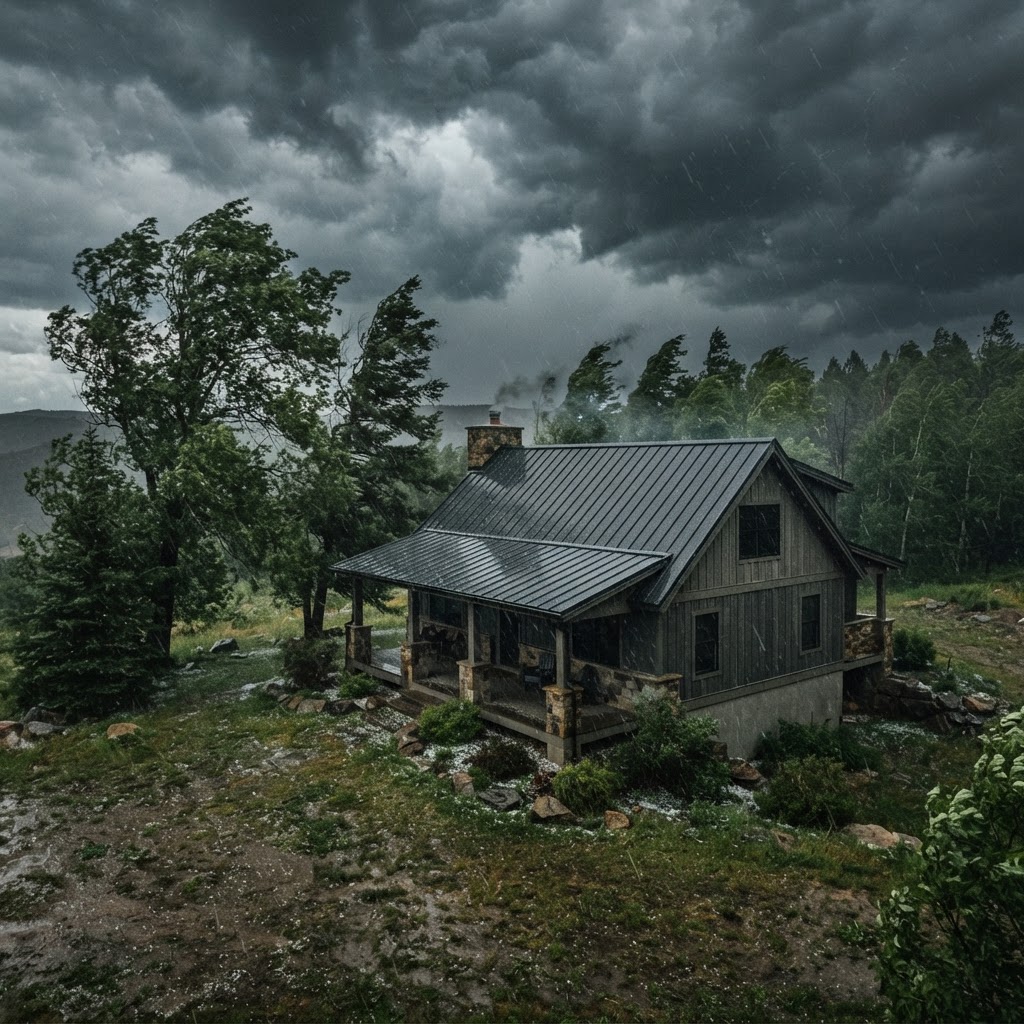
Wind is a lifting force before it is a pushing one. Gusts get under edges at the eaves and ridge, pressurize the attic, and try to peel the covering back like a lid. Standing-seam metal resists this with continuous interlocking panels and concealed fasteners, which is why coastal rebuilds so often choose it. Quality architectural asphalt answers back with heavier mats, engineered sealant strips, and wind ratings — ASTM D3161 Class F means the shingle survived 110 mph gust testing.
Installation decides almost as much as material. Six nails per shingle instead of four, the manufacturer’s starter course, and sealed deck edges are the difference between a rated number and a real result. FEMA’s post-storm assessments keep finding the same pattern: roofs fail first at edges and openings where attachment was weakest. Ask any installer exactly how they fasten and seal, and the good ones will answer happily.
What Roof Survives Hail Best?
Hail performance is measured, not guessed. UL 2218 drops a two-inch steel ball onto a shingle from 20 feet, and Class 4 is the top rating — no splitting, no cracking. Impact-resistant shingles use rubberized asphalt or reinforced mats to absorb the blow, and many insurers offer premium credits for them. Standard 3-tab shingles are the worst performers; the granule loss after a real hailstorm sets them up for early failure.
Metal behaves differently: large hail can leave visible dents, but the panel keeps shedding water, so the damage is often cosmetic. Tile and slate can crack under big stones, and replacing individual tiles takes a specialist. IBHS hail research keeps underlining the practical hierarchy — Class 4 asphalt for value, metal for longevity, and either one over standard shingles.
“Hail doesn’t schedule itself around your budget. When you’re already replacing a roof in hail country, Class 4 is the cheapest insurance you’ll ever buy.”
— Sam Construction Group USA, Fairfax roofing & restoration team
Which Roofs Are Safest in Wildfire Zones?
What Makes a Roof Covering Class A?
Class A is the top result under standard fire testing: the covering resists flame spread and survives a burning-brand test without igniting. Fiberglass-mat asphalt shingles earn it, as do metal, tile, and slate. Untreated wood shake sits at the bottom of the scale and is banned in many fire-prone jurisdictions.
In real wildfires, wind-blown embers — not a wall of flame — destroy most homes. Embers collect at vents, gutters, and roof-to-wall gaps and ignite from the inside. Class A coverings, ember-resistant mesh vents, metal gutters with noncombustible guards, and a debris-free first five feet of landscaping form the standard defense package.
The upgrades that matter most beyond the covering itself:
- Ember-resistant vents that block glowing debris from entering the attic
- Metal gutters with noncombustible leaf guards
- Class A cap shingles or metal ridge detailing
- A cleared, noncombustible first five feet around the house
- Routine removal of pine needles from valleys and gutters
What Works Best for Heavy Snow and Ice?
Snow load punishes structure, but ice punishes materials. When attic heat melts snow from underneath, water runs to the cold eave and refreezes into an ice dam, and the pooled water behind it backs up under shingles. The International Residential Code responds by requiring an ice-and-water barrier along eaves in cold-climate areas — a self-sealing membrane that buys real protection. Ice-and-water shield at valleys is cheap insurance everywhere else, too.
Metal is the natural snow-country roof: slick panels shed snow before it can sit and refreeze, though snow guards are needed to keep slides off walkways and shrubs. Steeper slopes shed sooner; tile and slate are strong but heavy, so rafter capacity needs confirming. Whatever the covering, attic ventilation and floor insulation are what keep the melt-freeze cycle from starting.
What Does Intense Sun and Heat Do to a Roof?
Sun is a slow-motion hazard. UV dries out asphalt oils, thermal cycling between afternoon and midnight opens cracks, and dark surfaces send heat into the attic, where it ages sheathing and drives cooling bills. The Department of Energy notes that reflective cool roofs can stay more than 50 degrees Fahrenheit cooler on a summer afternoon — less thermal stress on the covering and less heat radiating into bedrooms.
Tile brings thermal mass and air channels that buffer temperature swings, and reflective metal coatings bounce a large share of solar energy. Cool-roof granule technology now lets asphalt shingles reflect more without looking pale. In hot climates, attic ventilation matters as much as the covering: a well-vented attic runs closer to outdoor temperature and takes pressure off both the shingle and the air conditioner.
How Do You Choose for Mixed Climates?
Most addresses face several hazards at moderate intensity rather than one at catastrophic intensity. Northern Virginia is a textbook case: nor’easter and thunderstorm gusts, humid summers that streak south-facing slopes with algae, occasional hail, rare wildfire, and a real ice-dam season some winters. A Class F, algae-resistant architectural shingle with a strong nailing spec handles that mix at a sensible price, and standing-seam metal covers it for decades more.
What Is the IBHS FORTIFIED Home Standard?
For the strongest package, the IBHS FORTIFIED Home program — a research-backed standard that goes beyond building code — specifies a sealed roof deck, enhanced edge attachment, and locked-down ridges. Those details target the exact failure points FEMA finds after windstorms. A FORTIFIED-level roof is available with either metal or asphalt and is the single best upgrade for wind-driven rain.
“In a hurricane, the roof is the fuse. Keep the covering attached and the deck sealed, and the house usually keeps the weather outside.”
— Quality Control Lead, Sam Construction Group USA
Which Material Makes Sense for Your Budget?
Start from the numbers you already live with. In Northern Virginia, an architectural asphalt replacement typically runs $11,000 to $17,000 installed, and Remodeling Magazine’s Cost vs. Value Report finds roughly 60 percent of that returned at resale. Metal generally lands at two to three times the asphalt price and lasts two to three times as long. Tile and slate sit higher still, and their weight requires a structural check.
Do Metal Roofs Attract Lightning?
No — metal roofing neither causes nor attracts lightning. Tall trees, chimneys, and terrain shape strike paths, not roofing metal, and a struck metal roof safely disperses the charge because steel is noncombustible. If lightning is a local concern, a properly grounded system addresses it better than shingle choice ever could.
Here is the side-by-side on how major coverings perform against the most damaging hazards:
| Material | Wind Performance | Hail Performance | Fire Rating | Typical Lifespan |
|---|---|---|---|---|
| Standing-seam metal | Excellent — interlocking panels | Good; may dent cosmetically | Class A | 40–70 yrs |
| Impact-resistant architectural asphalt | Very good when Class F rated | Excellent — UL 2218 Class 4 | Class A | 20–30 yrs |
| Standard architectural asphalt | Good with six-nail fastening | Moderate | Class A | 20–30 yrs |
| Concrete tile | Very good when anchored | Good; individual tiles can crack | Class A | 50+ yrs |
| Clay tile | Very good when anchored | Good; individual tiles can crack | Class A | 50+ yrs |
| Slate | Excellent | Excellent | Class A | 50+ yrs |
When the shortlist is down to two or three materials, work it in order:
- List your dominant hazards from local history — wind, hail, fire, snow, or sun.
- Keep only materials rated for the top two on that list.
- Confirm structure and budget, especially for tile and slate weight.
- Compare warranty terms for the hazard you care about most, since wind coverage often requires the full system.
- Ask the installer to detail fastening, deck sealing, and flashing — the parts that turn ratings into results.
Extreme-Weather Roofing — Frequently Asked Questions
Is a metal roof worth it in Northern Virginia?
Often yes if you plan to stay 20 years or more: metal runs 40 to 70 years and handles wind, snow, and heat well. It costs more upfront than architectural asphalt, which typically runs $11,000 to $17,000 installed in our area. Balance your tenure, your budget, and how long you want the next roof conversation pushed out.
Do Class 4 shingles qualify for insurance discounts?
Many insurers offer premium credits for impact-resistant roofs, especially in hail-prone states, but the size varies by carrier. Ask your agent before the roof goes on and keep the shingle’s UL 2218 Class 4 documentation. The credit can offset much of the Class 4 upcharge within a few years.
Are heavier roofs always better in storms?
No. Wind performance comes from attachment and sealing, not mass — a well-nailed Class F shingle roof can outperform a badly fastened heavy one. Weight adds structural demand instead. Choose tested ratings and quality installation over pounds per square.
What is a Class A fire rating?
It is the best result under standard fire testing: the covering resists flame spread and a burning brand without igniting. Fiberglass-mat asphalt shingles, metal, tile, and slate all achieve Class A. Untreated wood shake does not.
Can one roof handle every kind of extreme weather?
Standing-seam metal comes closest — strong in wind, tolerant of hail, Class A against fire, and excellent in snow and heat. Impact-resistant architectural asphalt covers most hazards at a lower cost. Match the shortlist to the hazards your address actually faces.
Ready for a Roof Matched to the Weather?
We’ll assess the hazards your home actually faces across the Northern Virginia and DMV area, recommend the material that meets them, and install it with the attachment details that make ratings real. Free, written, and pressure-free.
☎ (571) 373-6388This article is general information for Northern Virginia property owners and is not a quote or a statement of any specific product’s terms. Costs, lifespans, and savings vary by home, climate, and product line — always confirm specifications for your own project. Free inspections: (571) 373-6388.