
Black Streaks on Your Roof? Here’s What They Really Are
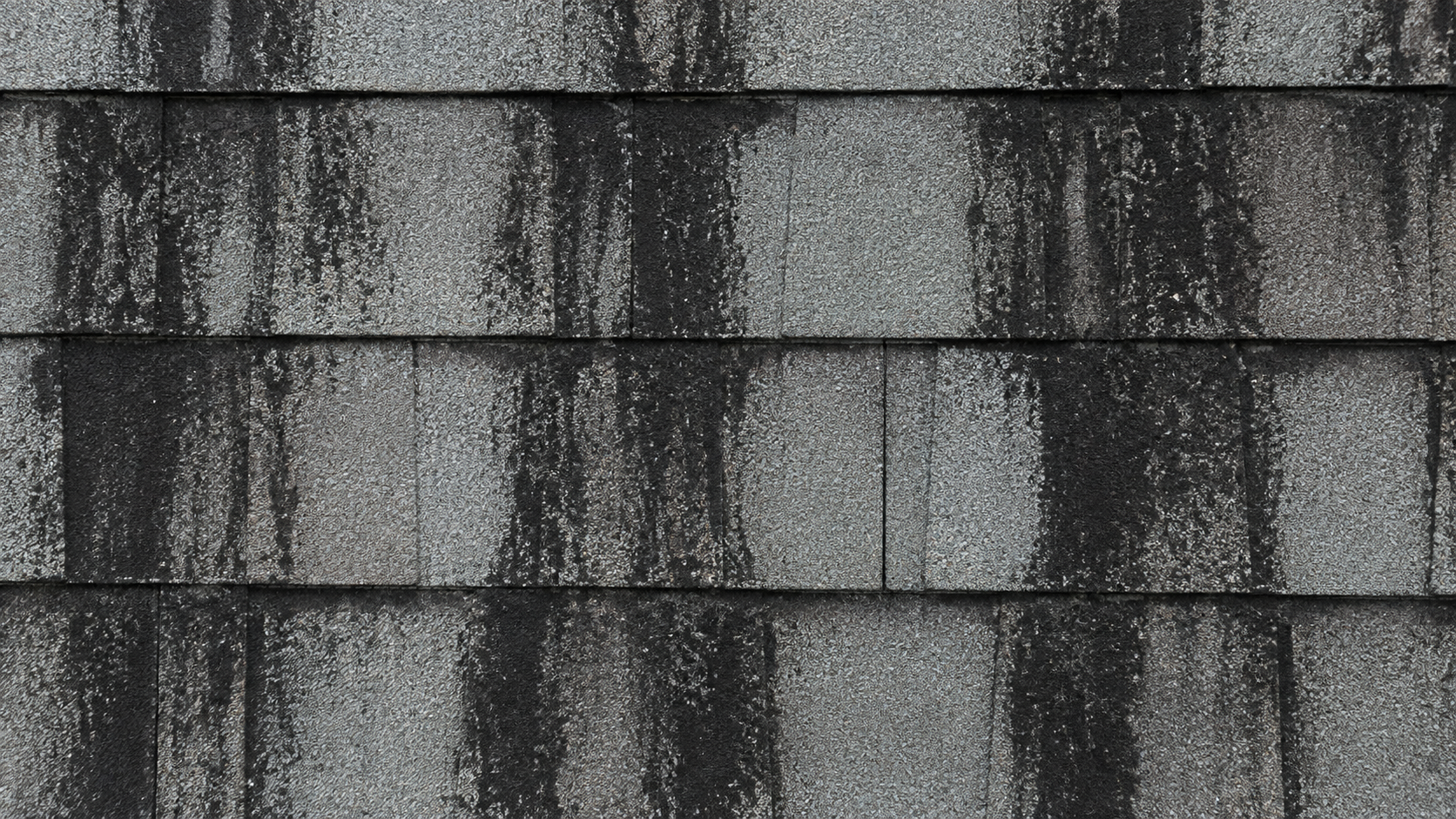
Those dark stains running down your Northern Virginia roof aren’t dirt, and they’re not just ugly. They’re living algae — and how you deal with them (and one thing you should never do) can make the difference between an easy fix and a ruined roof.
Quick Answer: The Black Streaks Explained
- They’re algae, not dirt. The specific culprit is Gloeocapsa magma, a blue-green algae that feeds on the limestone filler in asphalt shingles.
- Northern Virginia is ideal habitat — our warm, humid summers and heavy tree shade are exactly what algae need to thrive.
- It’s not purely cosmetic. Left for years, algae (and its frequent companions, moss and lichen) can trap moisture and shorten your roof’s life.
- Never pressure wash your roof. High pressure blasts off the protective granules and can void your shingle warranty — the cure becomes worse than the disease.
- The right fix is a professional low-pressure “soft wash,” and the right prevention is zinc/copper protection and algae-resistant shingles.
- Not sure if it’s staining or a failing roof? A free inspection settles it — call (571) 373-6388.
You pull into the driveway, glance up, and there they are: dark, drippy streaks running down the roof like the shingles are rusting. Your roof looks tired and dirty even though it may not be that old. Before you grab a pressure washer or assume you need a whole new roof, here’s what’s actually happening up there — and the single most important mistake to avoid.
What are the black streaks on my roof?
It surprises most homeowners, but roof stains are alive. Gloeocapsa magma lands on a roof as airborne spores, takes hold, and slowly colonizes the shingles, feeding on the calcium carbonate (limestone) that manufacturers add as filler. The streaks typically run downward because the algae spreads as rainwater carries spores and nutrients down the slope — which is why the stains so often start near the ridge and streak toward the gutters.
Algae vs. moss vs. lichen — what’s the difference?
Homeowners lump them together, but they behave differently:
- Algae — flat black streaks and stains; mostly a surface and aesthetic problem early on.
- Moss — green, fuzzy, three-dimensional growth that holds water like a sponge and lifts shingle edges; more damaging.
- Lichen — crusty, tough growth (a fungus-algae combo) that roots into the shingle surface and is the hardest to remove.
Are roof algae and moss actually damaging, or just ugly?
Don’t panic at the first streak — but don’t ignore it for a decade either. Here’s the real progression of harm:
- Curb appeal & value. Stained roofs read as neglected. For a home on the market — or in an HOA neighborhood — that matters immediately.
- Granule loss. As algae feeds and spreads, it contributes to the breakdown of the protective granule layer that shields shingles from UV.
- Moisture retention. Moss and lichen hold water against the roof, and trapped moisture accelerates aging, encourages rot at the deck, and worsens freeze-thaw damage in NoVA winters.
- Reduced reflectivity. A darkened roof absorbs more heat, which can nudge up attic temperatures and cooling costs in summer.
“People think the streaks are just cosmetic, so they wait. By the time moss and lichen move in behind the algae, you’re not cleaning a roof anymore — you’re trying to save one.”
— Sam Construction Group, Fairfax roofing & restoration team
Why do Northern Virginia roofs get black streaks so easily?
If it feels like every other roof in your neighborhood has the same streaks, you’re not imagining it. Three local factors make Northern Virginia algae country:
- Heat and humidity. NoVA summers are warm and muggy — prime growing conditions for Gloeocapsa magma.
- Tree canopy. The region’s mature trees keep roofs shaded and slow to dry, and they drop organic debris that feeds growth. North-facing slopes that rarely see direct sun are usually hit first and worst.
- Spore spread. Because algae travels by airborne spores, one colonized roof seeds the neighbors — which is why streaks tend to show up block by block.
Streaks taking over your roof?
A free inspection tells you whether it’s surface staining you can clean or a sign your roof is nearing the end — no pressure, no obligation.
Should I pressure wash my roof to remove the streaks?
This is the single most important takeaway in this article, because it’s the mistake that turns a cleanable roof into a replaceable one. A pressure washer is built to strip material — and on shingles, the “material” it strips is the granule layer protecting the asphalt from the sun. Homeowners (and unqualified “cleaners”) who pressure wash a roof frequently take years off its life in an afternoon.
⛔ Do not pressure wash — and be careful who you hire
High-pressure washing strips granules, drives water under shingles, and commonly voids shingle warranties. If a “roof cleaner” shows up with a pressure washer, that’s your cue to say no. Insist on a low-pressure soft-wash approach performed by someone who knows roofs — and never get up on a wet, algae-slick roof yourself.
The professional method, soft washing, uses low pressure combined with appropriate cleaning solutions to kill the algae and lift the staining without damaging the shingles. Done correctly, it restores the roof’s appearance while preserving the granules — and it’s a job best handled by professionals for both safety and results.
| Approach | What it does to shingles | Verdict |
|---|---|---|
| Pressure washing | Strips granules, forces water under shingles | Never — damages the roof |
| DIY bleach & a ladder | Risky footing; runoff harms plants; uneven results | Not recommended |
| Professional soft wash | Low pressure + solution; kills algae, preserves granules | The right method |
How can I prevent algae and moss from coming back?
Cleaning solves today’s problem; prevention keeps it from returning. The proven measures:
- Zinc or copper strips near the ridge. When it rains, trace amounts of metal wash down the roof and inhibit algae growth — a simple, effective deterrent.
- Algae-resistant shingles. Most major manufacturers now offer shingles with copper-infused granules built in; worth choosing at your next replacement, especially in shaded NoVA lots.
- Trim overhanging branches. More sunlight and airflow means a roof that dries faster and grows less.
- Keep gutters and roof clear. Removing leaves and debris denies moss and algae the damp, organic conditions they love.
- Schedule periodic inspections. Catching growth early keeps it a cleaning job rather than a replacement one.
Do black streaks mean I need a new roof?
The honest answer depends on what’s underneath the stains. On a relatively young roof, streaks are a cosmetic-and-maintenance problem you can resolve with a proper cleaning and some prevention. On an older roof already showing granule loss, curling, or moss damage, the algae is often just the most visible symptom of a roof that’s wearing out. That’s exactly the kind of call a professional inspection is designed to make — separating “clean it” from “replace it” before you spend on the wrong one.
Frequently asked questions about roof algae & black streaks
Will the black streaks damage my roof if I just leave them?
Early algae is mostly cosmetic, but leaving it for years allows it to contribute to granule breakdown and invites moss and lichen, which trap moisture and lift shingles. It is far cheaper to address staining early than to deal with the moisture damage that can follow.
Can I clean the streaks myself with bleach?
We do not recommend it. Getting on a roof is dangerous, cleaning-solution runoff can harm your landscaping, and it is easy to damage shingles or get uneven results. A professional soft wash is safer and more effective — and avoids the granule loss that DIY pressure washing causes.
How long before the streaks come back after cleaning?
Without prevention, algae can return within a few years in a climate like ours. Pairing a cleaning with zinc/copper protection and tree trimming — or choosing algae-resistant shingles at replacement — keeps a roof cleaner far longer.
Are algae-resistant shingles worth it?
In shaded, humid Northern Virginia, yes — they are a small upgrade that meaningfully reduces streaking over the roof’s life. If you are replacing your roof anyway, it is an easy decision, especially on north-facing or tree-covered slopes.
Do you offer free roof inspections in Northern Virginia?
Yes. Sam Construction Group provides free, no-obligation inspections across Fairfax and the surrounding NoVA area, so you will know whether your roof needs a cleaning, prevention, or replacement. Call (571) 373-6388.
Get an Honest Look at Those Roof Stains
Before you clean, pressure wash, or replace anything, find out what those streaks actually mean for your roof. Sam Construction Group inspects, explains your options, and helps you protect your home the right way.
☎ (571) 373-6388This article is general information for Northern Virginia property owners and is not a substitute for a professional roof inspection. Roof cleaning should be performed using manufacturer-approved low-pressure methods. Algae identification and shingle-composition details per the Asphalt Roofing Manufacturers Association (ARMA) and roofing manufacturer guidance.