
Chimneys and Your Roof: The #1 Leak Spot — and How to Keep Yours Dry
If your ceiling stains near the fireplace, your chimney is the prime suspect. Chimneys interrupt the roof more than almost anything else, with several parts that all have to work to keep water out. Here’s how a chimney sheds water, why it fails, the signs of a leak, and whether the fix belongs to a roofer or a mason.
Quick Answer: Chimneys & Leaks
- Chimneys are the most common roof-leak location because they’re a big interruption in the roof with several separate parts that must all stay watertight.
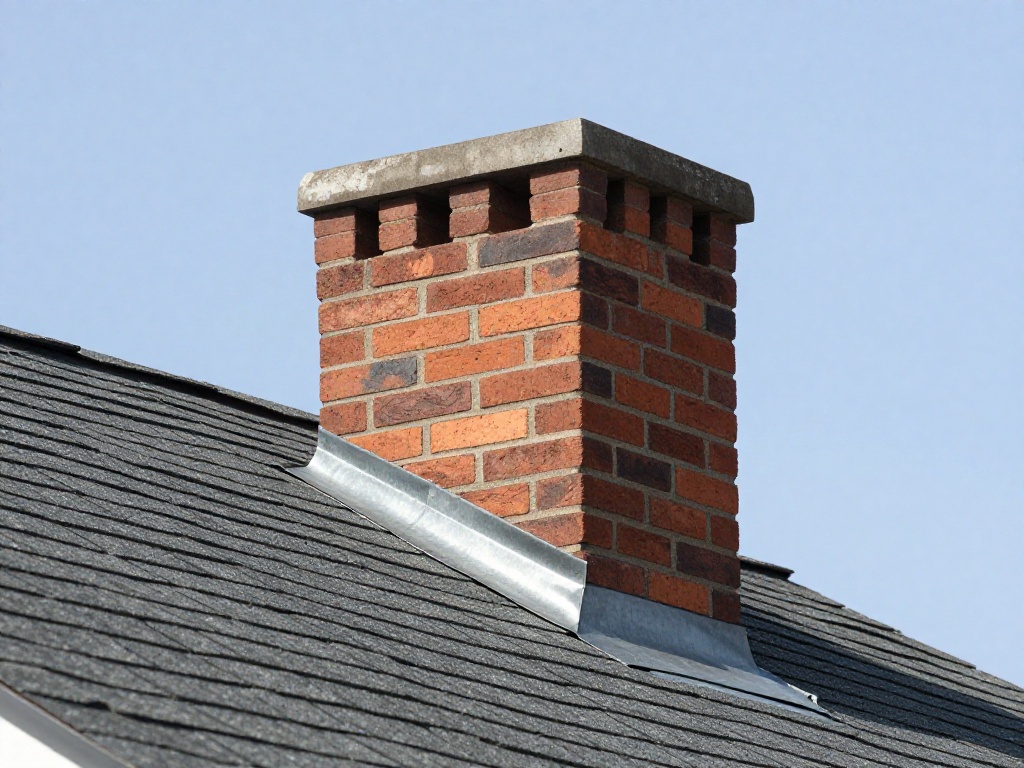
- Four things keep water out: flashing & counterflashing, the chimney crown, a chimney cap, and — on wide chimneys — a cricket.
- A chimney leak can be a roofing or a masonry problem. Flashing and crickets are roofing; a cracked crown or crumbling mortar is masonry.
- Watch for stains near the chimney, white efflorescence on the brick, rust in the firebox, or a musty smell.
- An inspection pinpoints the source — and tells you who should fix it. Book a free one: (571) 373-6388.
Ask any roofer where homes leak most, and “the chimney” will be near the top of the list. It makes sense: a chimney is a large, vertical interruption punched straight through the slope of your roof, and keeping water out depends on several different components working together. When any one of them fails, water finds its way in — and because water travels, the stain often shows up on a ceiling that isn’t even under the chimney. Here’s how the whole system works, and how to keep yours dry.
Why do chimneys leak so often?
Every part of a chimney’s waterproofing is a potential failure point, and they age on different schedules. The flashing can lift or corrode, the crown can crack, the cap can go missing, and the mortar can erode — each on its own can let water in. That’s why “it’s the chimney” is such a common diagnosis, and why the real question is usually which part of the chimney.
What parts of a chimney keep water out?
| Component | What it does | Common failure |
|---|---|---|
| Flashing & counterflashing | Seals the joint where chimney meets roof | Lifting, corrosion, or a sealant-only “fix” |
| Chimney crown | The sloped top slab that sheds water off the masonry | Cracks that let water into the structure |
| Chimney cap | Covers the flue to keep out rain and animals | Missing, rusted, or dislodged |
| Cricket (saddle) | Diverts roof runoff around a wide chimney | Missing entirely — water pools behind the chimney |
| Masonry & mortar | The brick and joints themselves | Eroded mortar and porous, water-absorbing brick |
What is a chimney cricket, and do I need one?
Without a cricket, a wide chimney acts like a dam: water and debris collect on the up-slope side, sit against the masonry and flashing, and eventually work their way in. A cricket sheds that water cleanly to either side. If you have a wide chimney and no cricket — and especially if you see staining or debris piling up behind it — it’s worth having a professional look at whether one should be added.
Is a chimney leak a roofing problem or a masonry problem?
This is where a lot of homeowners get frustrated: a leak gets “fixed” but keeps coming back, because the wrong trade addressed the wrong part. A roofer can reflash a chimney beautifully, but if the crown is cracked, water still gets in. Conversely, a perfect crown won’t help if the flashing is shot. The value of a proper inspection is separating those out so the actual source gets addressed.
“The chimney is where we find more leaks than anywhere else, and it’s also where we see the most bad repairs — somebody smears sealant over old flashing and calls it done. Half the battle is figuring out whether it’s the flashing, the crown, the cap, or the brick. Fix the right one and it stays dry.”
— Sam Construction Group, Fairfax roofing & restoration team
What are the signs of a chimney leak?
- Ceiling or wall stains near the chimney — though the actual entry point may be higher up, since water travels.
- White, chalky efflorescence on the brick — a sign water is moving through the masonry.
- Rust on the damper, firebox, or metal components inside.
- A musty, damp smell in the fireplace, especially after rain.
- Crumbling or spalling brick and mortar — flaking masonry that indicates water intrusion and freeze-thaw damage.
⚠️ Beware the sealant-only “repair”
As with roof flashing generally, a bead of caulk smeared over failing chimney flashing is a temporary patch, not a fix. If a leak keeps returning after being “sealed,” the underlying flashing, crown, or masonry is the real issue and needs proper attention.
Staining near your fireplace or chimney?
A free inspection identifies exactly which part of the chimney is letting water in — and whether it’s a roofing or masonry fix. No pressure, no obligation.
How do you prevent chimney leaks?
Prevention is mostly about not letting small problems become big ones. Proper counterflashing tucked into the masonry (not just surface-sealed), a crack-free crown, a cap over the flue, and a cricket on wide chimneys cover the main bases. From there, periodic inspection — the same free inspection that covers your roof — keeps an eye on the details before they turn into an interior stain.
Frequently asked questions about chimney leaks
Why does my chimney only leak sometimes?
Chimney leaks often depend on wind-driven rain, the direction a storm comes from, or how much water is running down that part of the roof. An intermittent leak is still a real leak — the conditions just have to line up. It’s worth inspecting rather than waiting for it to become constant.
Is it normal for water to come in only during heavy storms?
It’s common, but not something to ignore. Wind-driven rain can push water past marginal flashing or into small crown cracks that hold up in lighter rain. Storm-only leaks usually point to a specific weak point worth finding and fixing.
Can a chimney cap really stop leaks?
A cap keeps rain and animals out of the flue opening, which prevents one route of water entry — but it won’t fix flashing, crown, or masonry problems. It’s one part of a healthy chimney, not a cure-all.
Should the chimney be addressed when I get a new roof?
Yes — like other flashing, the chimney flashing should be evaluated and typically renewed during a reroof, while everything is accessible. It’s also a good time to check the crown and cap and decide whether a cricket is needed.
Do you inspect chimney flashing and crickets?
Yes. Because chimneys are the most common leak point, our free inspections look closely at the flashing, counterflashing, crown, cap, and whether a wide chimney needs a cricket — and we’ll tell you honestly if any part is a masonry job. Call (571) 373-6388.
Keep the Most Common Leak Spot Dry
The chimney leaks more than any other part of the roof — and the fix depends entirely on which part is failing. Sam Construction Group inspects the whole chimney system and points you to the right repair, honestly.
☎ (571) 373-6388This article is general information for Northern Virginia property owners and is not a substitute for a professional inspection. Some chimney repairs involve masonry work; specific scope is determined on-site.