
What Is Fascia Rot, and How Can Roof Drainage Problems Cause It?
Fascia rot is the decay of the fascia boards along your roof’s edge, most often caused by roof drainage problems — clogged or failing gutters that let water overflow and soak into the wood. Left unaddressed, fascia rot spreads to the soffit, roof edge, and structure.
Quick Answer: The 90-Second Summary
- Fascia rot is decay of the boards along your roof edge, caused by prolonged moisture exposure.
- Clogged and failing gutters overflow onto the fascia — the most common cause by far.
- Replacing the wood alone is not a fix — the drainage cause has to be corrected too.
- For fascia repair in Northern Virginia, call Sam Construction Group USA: (571) 294-4977.
What Is Fascia, and What Is Fascia Rot?
The fascia is the vertical board that runs along the edge of your roof, behind and supporting the gutters. It is the band you see where the roof meets the gutters, and it provides a mounting surface for the gutters while giving the roofline a finished look.
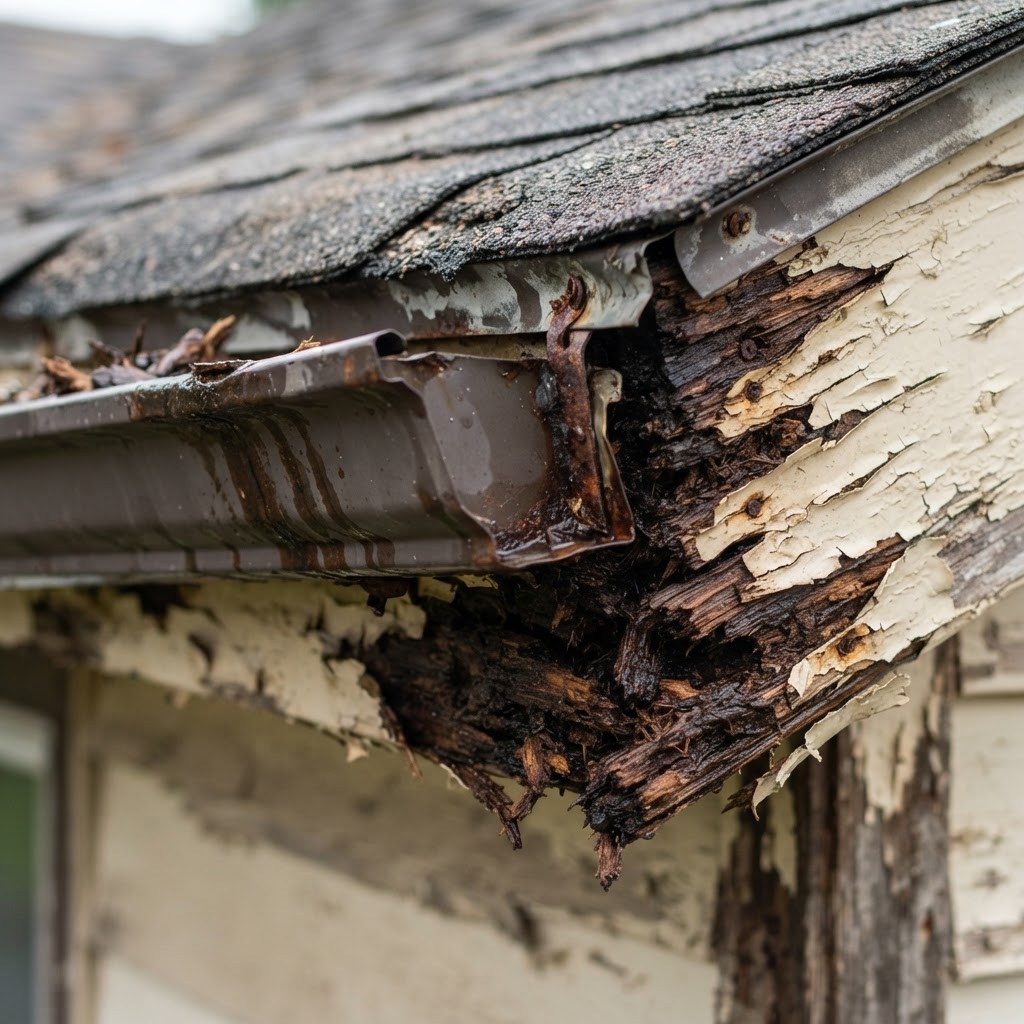
Fascia rot is the decay and deterioration of these fascia boards — typically caused by prolonged exposure to moisture. As the wood absorbs water over time, it softens, decays, and rots, losing its strength and its ability to support the gutters and protect the roof edge.
How Roof Drainage Problems Cause Fascia Rot
Here is the key relationship: the fascia sits right where water leaves your roof, which makes it especially vulnerable to drainage problems. The most common cause of fascia rot is gutter and drainage failure:
- Clogged gutters. When gutters clog with leaves and debris — very common under Northern Virginia’s heavy tree cover — water overflows the gutters and spills down onto and behind the fascia, soaking the wood. Repeated soaking leads to rot.
- Failing or improperly pitched gutters. Gutters that sag, leak, or do not drain properly allow water to sit against or overflow onto the fascia, causing moisture damage.
- Missing or improper drip edge. Without proper drip edge flashing directing water into the gutters, water can run back against the fascia, contributing to rot.
- Roof leaks at the edge. Leaks that reach the roof edge can also soak the fascia from behind.
In short, when water is not properly channeled away from the roof edge — the job of gutters and drip edge — it ends up soaking the fascia, and rot follows. Fascia rot is often a symptom of a drainage problem.
Why Northern Virginia’s Conditions Contribute
Northern Virginia’s humid climate, frequent storms, and heavy tree cover all contribute to fascia rot:
- Heavy tree cover means frequent gutter clogs that cause overflow
- Humidity and rain keep the wood exposed to moisture
- Storms bring heavy water flow that overwhelms clogged or failing drainage
This makes fascia rot a common issue for Northern Virginia homes.
Signs of Fascia Rot
Watch for these warning signs along your roof edge:
- Peeling paint or discoloration on the fascia
- Soft, crumbling, or visibly rotted wood along the roof edge
- Sagging gutters — a sign the fascia behind them is rotting and failing to hold them
- Water stains along the roof edge
- Visible moisture damage on the fascia boards
- Signs of pests, which are attracted to and can worsen rotted wood
Why You Should Not Ignore Fascia Rot
Fascia rot spreads. Left unaddressed, rot in the fascia can lead to:
Rot spreading to the soffit and roof edge, damage to the roof decking and structure as moisture continues, gutter failure as the rotted fascia can no longer support the gutters, pest intrusion through the compromised wood, and a larger, more expensive repair the longer it waits.
What starts as a small patch of rotted fascia can become a significant repair affecting the roof edge, gutters, and structure. Addressing it early — and fixing the underlying drainage cause — stops the spread.
Why the Drainage Cause Must Be Addressed
Here is a crucial point: simply replacing rotted fascia without fixing the drainage problem that caused it will lead to the rot returning. The lasting fix addresses both the damaged fascia and the underlying cause — the clogged, failing, or improper drainage. This is why a professional approach looks at the whole roof-edge system — gutters, drip edge, fascia, and soffit — together.
How Sam Construction Group USA Repairs Fascia Rot
Sam Construction Group USA, a licensed and insured Fairfax, VA roofing and restoration contractor, repairs fascia rot across Northern Virginia — replacing the damaged fascia and addressing the underlying drainage problem, including gutters, drip edge, and roof-edge detailing, so the rot does not return. We protect your roof’s edge and stop the damage before it spreads to the soffit, decking, and structure.
Noticed peeling paint, soft wood, or sagging gutters along your roof edge? Call Sam Construction Group USA at (571) 294-4977 for a free inspection.
Book My Free InspectionFrequently Asked Questions
What is fascia rot?
Fascia rot is the decay and deterioration of the fascia boards — the vertical boards that run along the edge of your roof behind and supporting the gutters. It is typically caused by prolonged exposure to moisture: as the wood absorbs water over time, it softens, decays, and rots, losing strength and its ability to support the gutters.
How do roof drainage problems cause fascia rot?
The fascia sits right where water leaves your roof. When gutters clog and overflow — common under Northern Virginia’s heavy tree cover — or when gutters sag, leak, or drain poorly, water spills onto and behind the fascia and soaks the wood. Missing or improper drip edge and edge leaks add to it. Fascia rot is often a symptom of a drainage problem.
What are the signs of fascia rot?
Peeling paint or discoloration on the fascia, soft crumbling or visibly rotted wood along the roof edge, sagging gutters that the fascia can no longer hold, water stains along the roof edge, visible moisture damage on the fascia boards, and signs of pests attracted to rotted wood.
Can I just replace the rotted fascia and be done?
No. Simply replacing rotted fascia without fixing the drainage problem that caused it will lead to the rot returning. The lasting fix addresses both the damaged fascia and the underlying cause — the clogged, failing, or improper drainage — which is why a professional looks at the whole roof-edge system together. Free inspections: (571) 294-4977.
Fascia Rot Along Your Roof Edge?
Sam Construction Group USA, a licensed and insured Fairfax, VA roofing and restoration contractor, repairs fascia rot across Northern Virginia — replacing the damaged boards and correcting the underlying drainage cause. Call (571) 294-4977.
Book My Free Inspection