
Gutters and Your Roof: Drainage That Protects Your Whole House
Gutters are the most ignored part of a home — until they fail. They don’t just keep water off your head; they protect your roof edge, your walls, and even your foundation. Here’s why your drainage system matters more than you think, and how to keep it working.
Quick Answer: Why Gutters Matter
- Gutters are your home’s drainage system, not a decorative trim. They collect roof runoff and route it away from the structure.
- They protect far more than the roof — the fascia, soffit, siding, windows, landscaping, and especially the foundation and basement.
- Clogged gutters cause a cascade of damage: rotted roof edges, ice dams in winter, and water pooling against your foundation.
- Clean at least twice a year — and more often under Northern Virginia’s heavy tree cover.
- Gutter guards help but aren’t magic. They reduce cleaning frequency; they don’t eliminate maintenance.
- A roof inspection should include the gutters. Book a free one with Sam Construction Group at (571) 373-6388.
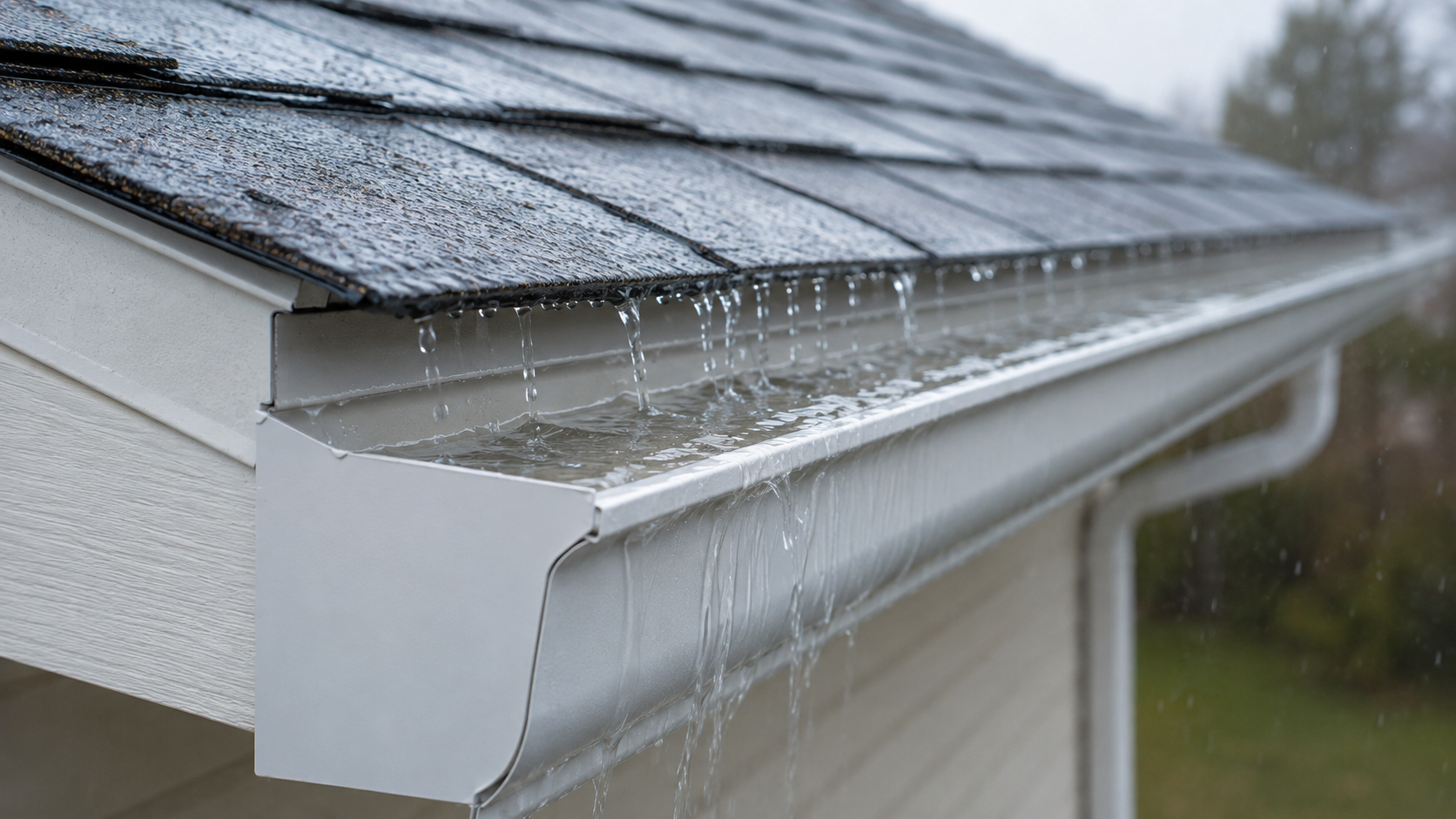
Ask a homeowner to name the parts of their roof and they’ll mention shingles, maybe flashing — almost never gutters. Yet gutters are doing one of the hardest jobs on the house: taking the thousands of gallons of water that pour off your roof every year and moving it safely away before it can damage anything. When they stop working, the problems don’t stay at the gutter line. They spread up into the roof and down into the foundation.
How do gutters protect my roof and home?
Picture where roof runoff would go without gutters: straight down along the edge of the roof, behind the fascia, down the walls, and into the ground right against your foundation. Gutters intercept all of that. Here’s the full chain they protect:
- Roof edge & decking — preventing water from wicking back under the shingles and rotting the deck
- Fascia & soffit — the wood trim behind and beneath the gutter, which rots fast when water overflows
- Siding & windows — protected from constant sheeting water and splash-back staining
- Foundation & basement — the big one; controlled drainage keeps water from pooling against and seeping into the foundation
- Landscaping & walkways — spared the erosion that uncontrolled runoff causes
What are the signs my gutters are failing?
Gutters usually warn you before they fail completely. The signs:
- Water overflowing the edges during rain instead of running to the downspouts
- Sagging gutters or sections pulling away from the fascia — often from the weight of debris and trapped water
- Granules collecting in the gutters — a sign of shingle wear, and a contributor to clogs
- Water stains or peeling paint on the fascia and siding below the gutter line
- Plants, weeds, or standing water in the trough — proof they’re holding debris and moisture
- Pooling water or erosion at the base of downspouts near the foundation
“People treat gutters as an afterthought until they’re paying to replace rotted fascia or dry out a basement. Almost all of that traces back to water that a working gutter would have carried away. It’s the cheapest system on the house to maintain and one of the most expensive to neglect.”
— Sam Construction Group, Fairfax roofing & restoration team
What happens if you ignore your gutters?
The danger of gutters is that their failure damages other things — so the cost shows up somewhere you don’t immediately connect to a clogged trough. The cascade typically runs like this:
| Neglected gutter problem | What it leads to |
|---|---|
| Overflow behind the gutter | Rotted fascia and soffit; water under the roof edge and into the decking |
| Debris holding moisture | Accelerated rust/corrosion and a heavier, sagging gutter that pulls loose |
| Winter overflow & backup | Ice dams at the roof edge, forcing water under the shingles |
| Runoff at the foundation | Pooling water, basement leaks, erosion, and potential foundation issues |
Are gutter guards worth it in Northern Virginia?
Northern Virginia’s mature tree canopy is exactly why gutter guards are popular here — constant leaf and debris drop is the main reason gutters clog. Guards keep the bulk of that debris out, which can turn a twice-a-year cleaning chore into a much lighter one. That said, set expectations correctly:
- They reduce, not remove, maintenance. Fine debris, shingle grit, and pollen can still accumulate, and guards themselves need occasional clearing.
- Quality matters. There’s a wide range of guard types and build quality; a cheap guard poorly installed can cause more problems than it solves.
- They work best as part of a healthy system. Guards on sagging, undersized, or poorly pitched gutters won’t fix the underlying drainage issue.
The right answer depends on your specific home and tree situation — which is worth discussing during an inspection rather than buying off a truck.
Not sure your gutters are keeping up?
A free inspection covers your gutters along with your roof — catching drainage problems before they reach your fascia, foundation, or basement.
How often should gutters be cleaned in Northern Virginia?
Fall is the non-negotiable cleaning, because leaves clogging the gutters right before winter is what sets up ice dams and freeze-related backups. But a spring cleaning matters too, clearing the seeds, buds, and debris that accumulate over winter and early spring. If your home sits under a heavy canopy, plan on checking them more often — the trees that make NoVA neighborhoods beautiful are the same ones filling your gutters.
What gutter materials and styles are available?
| Option | Notes |
|---|---|
| Seamless aluminum | The most common choice — rust-resistant, affordable, few seams to leak |
| Steel | Stronger and more impact-resistant; heavier, and can rust over time |
| Copper | Premium, extremely long-lasting, develops a distinctive patina |
| K-style vs. half-round | K-style holds more water and is standard today; half-round is a classic look |
Frequently asked questions about gutters
Can clogged gutters really cause a roof leak?
Yes. When gutters overflow, water backs up under the roof’s edge and can wick beneath the shingles into the decking — and in winter, that backup feeds ice dams that force water inside. A gutter problem frequently becomes a roof and interior problem.
Do I need to replace my gutters or just clean them?
It depends on their condition. Gutters that are simply clogged need cleaning; gutters that are sagging, pulling away, rusted through, or badly pitched may need repair or replacement. An inspection tells you which — and whether the fascia behind them has already been affected.
Are seamless gutters better?
Seamless aluminum gutters are popular because they have far fewer joints, which are the spots most likely to leak and clog. For most Northern Virginia homes they’re a durable, low-maintenance choice.
Should I clean my own gutters?
Only if you can do it safely from a stable ladder and are comfortable doing so — falls from ladders are a leading home-maintenance injury. For higher gutters, steep terrain, or two-story homes, it’s safer to hire it out and pair it with a roof inspection.
Do you inspect gutters as part of a roof inspection?
Yes. Gutters are part of your roof’s water-management system, so our free inspections look at them alongside the roof itself. Call (571) 373-6388 to schedule.
Protect the Whole House — Start With a Free Inspection
Your gutters do more for your home than almost any other part of the roof system. Sam Construction Group inspects your roof and gutters together, so small drainage problems never become big structural ones.
☎ (571) 373-6388This article is general information for Northern Virginia property owners and is not a substitute for a professional inspection. Never attempt gutter or roof work that isn’t safe to do from a stable position. Cleaning-frequency and material guidance reflects standard industry practice.