
How to Find (and Stop) a Roof Leak
There’s a stain on your ceiling and a knot in your stomach. Before you panic — or climb a ladder — here’s the thing most homeowners don’t know: the leak is almost never directly above the stain. Here’s how to actually find it.
Quick Answer: Finding a Roof Leak
- The leak isn’t where the stain is. Water enters at one point and travels along the roof deck and rafters before it drops — so the ceiling mark is downstream of the real entry point.
- Usual suspects: flashing (around chimneys, skylights, walls), cracked plumbing-vent boots, roof valleys, exposed or backed-out nails, ice dams, and clogged gutters — more often than the shingles themselves.
- Trace it from the attic, not the roof. A flashlight during or right after rain, following the water uphill to its source, is safer and more revealing.
- Act fast inside to limit damage — contain the water, protect belongings, and photograph everything for a possible insurance claim.
- Don’t get on a wet roof, and don’t just seal the ceiling — you’ll hide the problem while the deck rots above it.
- A pro finds the true source fast. Sam Construction Group offers free leak inspections — call (571) 373-6388.
A roof leak is one of the most stressful things a homeowner can find, partly because it feels urgent and mysterious at the same time. Water is getting in — but where? The good news is that roof leaks follow predictable patterns. Once you understand how water actually moves through a roof, finding the culprit gets a lot less mysterious. Here’s the field guide.
How do I find the source of a roof leak?
The instinct is to run outside and stare at the roof, but the fastest path to the source usually runs through your attic. Water entering the roof travels along the underside of the decking and down the rafters until it finds a low point to drip from — which is why chasing the ceiling stain leads you astray. Working from the attic lets you follow the trail back to the entry point.
Why is the leak never where the stain is?
This single principle explains why so many DIY leak repairs fail: the homeowner patches the spot directly above the stain, the rain returns, and the leak is right back. You have to think like water. It takes the path of least resistance — along nails, down rafters, across the top of the ceiling drywall — until gravity finally wins. Finding a leak means working backward from the drip to the entry, usually up the slope of the roof.
“Homeowners circle the wet spot on the ceiling and assume that’s the hole. Nine times out of ten the actual entry point is uphill and to the side — sometimes on a completely different part of the roof. Water is sneaky that way.”
— Sam Construction Group, Fairfax roofing & restoration team
What are the most common causes of roof leaks?
| Leak source | What goes wrong | Where to look |
|---|---|---|
| Flashing | Metal at joints rusts, lifts, or pulls away | Chimneys, skylights, wall-to-roof joints, dormers |
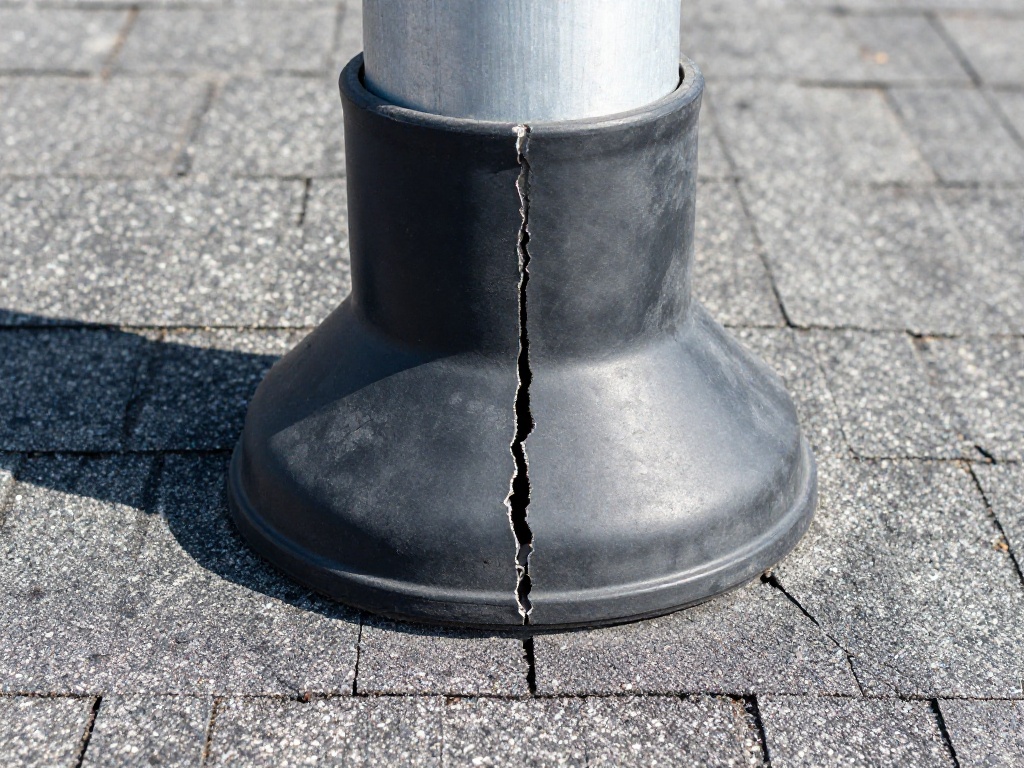
| Plumbing-vent boots | The rubber collar cracks and splits with age — a very common culprit | Pipes sticking up through the roof |
| Valleys | Where two roof slopes meet channels heavy water; damage here leaks fast | The “V” lines between roof planes |
| Nails | Backed-out or exposed nails let water in through the hole | Across the field, especially after wind |
| Ice dams | Ice at the eaves forces water back up under the shingles | Roof edges after snow/freeze |
| Clogged gutters | Overflow backs water up under the roof edge | Gutter line, especially in fall |
| Shingles | Missing, cracked, or curled shingles expose the underlayment | Anywhere, often after storms |
Notice how many of these are the small, easy-to-overlook details of a roof rather than its big surfaces. A cracked rubber vent boot is a perfect example — a small, cheap part that fails quietly and causes a leak far out of proportion to its size.
How can I trace a roof leak myself — safely?
Here’s a safe, effective approach:
- Check the attic during or right after rain. With a flashlight, look for active water, wet insulation, water stains on the decking, or shiny/damp rafters — then follow the trail to its highest wet point.
- Mark the spot. Note where the water enters (measure from a chimney, vent, or wall) so it can be found from outside.
- Look from the ground. From a safe distance, scan the area above the entry point for missing shingles, damaged flashing, or a vent boot.
- Try a hose test (dry weather, with a helper). One person runs water on the roof low-to-high in sections while another watches inside for the drip — isolating the source without waiting for rain.
- Don’t climb a wet or steep roof. If the source isn’t obvious from the ground and attic, that’s the point to call a professional.
⚠️ Two things not to do
Don’t get on a wet roof — it’s one of the most common causes of serious home-maintenance falls. And don’t just paint or seal the ceiling stain. Covering the evidence doesn’t stop the water; it lets the leak keep rotting the decking and insulation out of sight until the damage is far worse.
Can’t find the source — or don’t want to risk the ladder?
Sam Construction Group tracks down the true entry point fast and shows you exactly what’s going on. Free, no-obligation leak inspections across NoVA.
What should I do right now to limit the damage?
While you line up a professional, take these steps immediately:
- Move or cover valuables and furniture away from the drip zone.
- Contain the water with buckets and towels; lay down plastic to protect floors.
- Relieve a bulging ceiling. A sagging, water-filled bulge can burst — carefully piercing the lowest point with a small hole to drain it into a bucket is safer than letting it collapse.
- Photograph and document everything — the source if you found it, the interior damage, affected belongings — for a potential insurance claim.
- Note the date and any storm that may have caused it, in case it becomes a claim.
When is a roof leak an emergency?
A steady stream, a bulging ceiling, or water near light fixtures and wiring calls for immediate action (and keeping clear of the affected electrical). But don’t let a “minor,” intermittent drip lull you — the reason to act on small leaks is what they turn into.
Why do small leaks cause big damage if ignored?
The drip on your ceiling is the tip of the iceberg. Above it, the same water has been saturating insulation (destroying its effectiveness), soaking into the wood decking and framing (inviting rot), and creating the damp, dark conditions mold loves. A leak that could have been a simple flashing or vent-boot repair becomes rotted decking, ruined insulation, stained and sagging drywall, and potential mold remediation. The lesson is the same one that runs through every roofing decision: catching it early is dramatically cheaper than waiting.
Frequently asked questions about roof leaks
Can I fix a roof leak myself?
You can take emergency interior steps (containing water, documenting damage) yourself, and sometimes identify the source from the attic and ground. But the actual repair — and any work on the roof — is best left to a professional, both for safety and because a lasting fix requires correctly addressing flashing, boots, or underlayment, not just surface patching.
Why does my roof only leak sometimes?
Intermittent leaks are common and depend on rain direction, intensity, wind, and how much water reaches the weak point. A leak that only shows up in heavy or wind-driven rain is still a real leak — it just needs the right conditions to reach your ceiling. It won’t fix itself.
Will insurance cover a roof leak?
It depends on the cause. Sudden, storm-related damage is often covered, while leaks from age, wear, or deferred maintenance typically aren’t. Documenting the leak promptly — and its likely cause — matters. A contractor experienced with insurance claims can help you determine which applies.
How much of my roof is damaged if I have one leak?
Sometimes just the one failed detail; sometimes it’s a sign of broader wear. That’s exactly what an inspection determines — whether you need a targeted repair or whether the leak is one symptom of a roof nearing the end of its life.
Do you offer free roof-leak inspections in Northern Virginia?
Yes. Sam Construction Group provides free, no-obligation leak inspections across Fairfax and the surrounding NoVA area — we find the true source and explain your options. Call (571) 373-6388.
Stop the Leak at the Source — Free Inspection
Don’t chase a ceiling stain or risk a wet roof. Sam Construction Group finds the real entry point, explains exactly what’s happening, and stops the water for good.
☎ (571) 373-6388This article is general information for Northern Virginia property owners and is not a substitute for a professional roof inspection. Never attempt roof work that isn’t safe to do from the ground, and keep clear of water near electrical fixtures. Contact a qualified professional for active or electrical-adjacent leaks.