
How Overhanging Trees Affect Your Roof: Shade, Branch Damage, and Maintenance
Overhanging trees affect your roof through debris accumulation that traps moisture, shade that promotes moss and algae growth, branch abrasion that wears down shingles, and the risk of falling limbs. Managing overhanging trees with professional trimming and regular roof inspection protects your roof.
Quick Answer: The 90-Second Summary
- Overhanging trees damage roofs four ways: debris, shade, branch abrasion, and falling limbs.
- Shade keeps the roof damp, which feeds moss and algae and shortens shingle life.
- Trim back overhanging branches professionally and inspect the roof regularly and after storms.
- For tree-related roof care in Northern Virginia, call Sam Construction Group USA: (571) 294-4977.
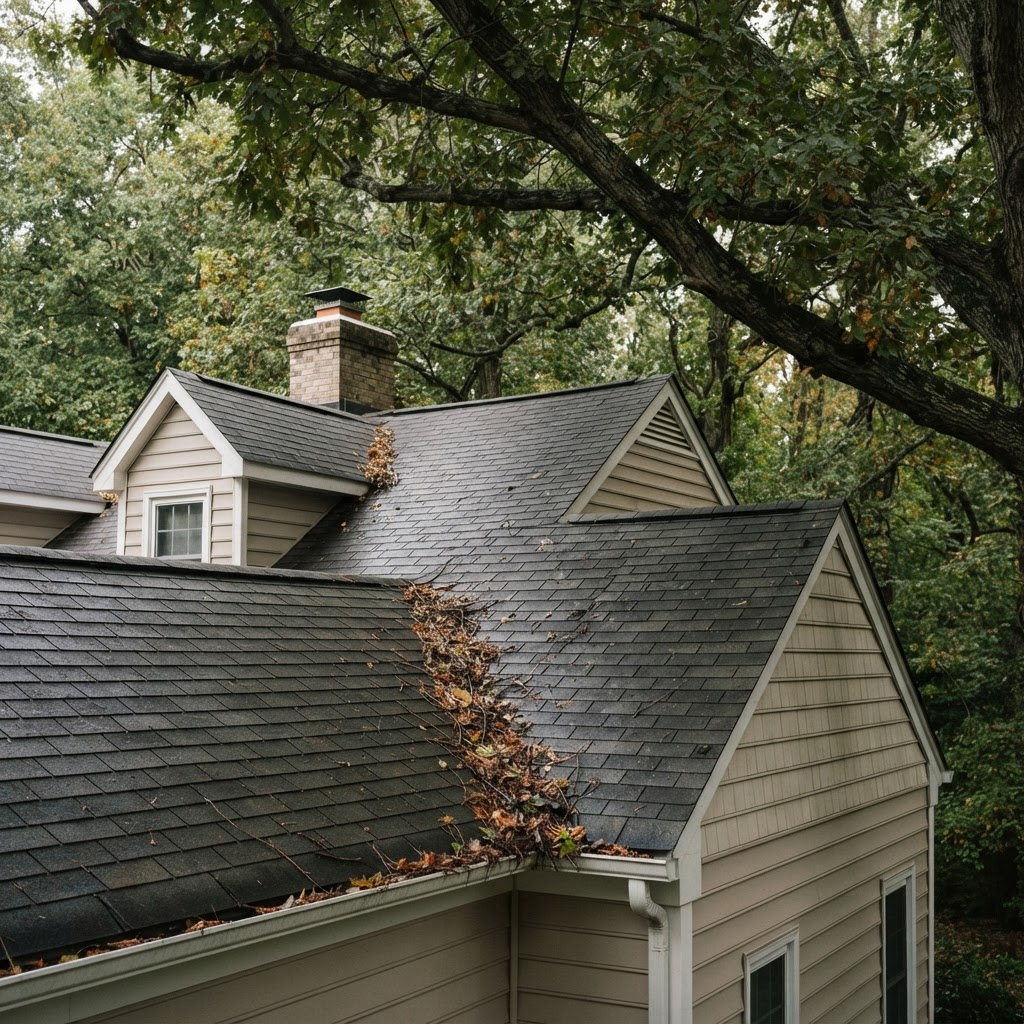
The Ways Overhanging Trees Affect Your Roof
1. Debris Accumulation and Moisture Retention
Overhanging branches constantly drop leaves, twigs, needles, and debris onto your roof. This debris:
- Accumulates in valleys, around penetrations, and in gutters
- Traps moisture against the roof surface, accelerating deterioration
- Clogs gutters, causing water to back up and potentially damage the roof edge and fascia
- Creates conditions for rot and decay
Debris accumulation is one of the most persistent problems overhanging trees cause, and it is especially significant in Northern Virginia’s wooded neighborhoods.
2. Shade and Moisture — Promoting Moss and Algae
Overhanging trees cast shade that keeps parts of the roof damp and cool — ideal conditions for moss and algae growth:
- Moss holds moisture against the shingles and can lift them, creating leak paths
- Algae causes the black streaks common on shaded Northern Virginia roofs
- Shaded areas stay wet longer, accelerating deterioration
The combination of shade and moisture is a significant way overhanging trees shorten a roof’s life.
3. Branch Abrasion
Branches that hang over and touch the roof scrape and abrade the shingles as they move in the wind. This abrasion:
- Wears away the protective granules on shingles
- Damages the shingle surface over time
- Creates weak points vulnerable to leaks
Even without a dramatic falling limb, the constant rubbing of overhanging branches quietly damages the roof.
4. Falling Limbs and Branches
The most dramatic risk: overhanging branches can break and fall onto the roof, especially during Northern Virginia’s storms. Falling limbs can cause cracked or broken shingles, punctures in the roof, and serious impact and structural damage. Overhanging limbs are essentially falling-damage risks waiting for the next storm.
Why Overhanging Trees Are a Northern Virginia Concern
With Northern Virginia’s heavy tree cover — especially in established and wooded neighborhoods — overhanging trees are extremely common, and the combination with our frequent storms and humidity makes the resulting roof issues particularly relevant here. Many Northern Virginia roofs deal with these challenges year-round.
How to Protect Your Roof From Overhanging Trees
- Professional tree trimming. The most effective step is trimming back overhanging branches to keep them away from the roof. This reduces debris, eliminates abrasion, lowers falling-limb risk, and reduces the shade that promotes moss. For large trees, this is a job for a professional — done safely and correctly.
- Regular roof and gutter cleaning. Keep the roof and gutters clear of the debris that overhanging trees drop, so water drains properly and moisture is not trapped.
- Address moss and algae properly. Treat moss and algae with proper methods — never pressure washing, which damages shingles — to keep the roof surface healthy.
- Regular roof inspections. Have your roof professionally inspected regularly, and after storms, to catch tree-related damage such as abrasion, debris damage, and limb impact early.
When to Arrange Tree Trimming or a Roof Inspection
Consider professional tree trimming when:
- Branches touch or hang directly over the roof
- Significant debris accumulates on the roof and in gutters
- Branches pose a falling risk to the roof
- Heavy shade is promoting moss and algae
And arrange a roof inspection when:
- You notice debris buildup, moss, or algae
- After any storm that may have brought down limbs
- If you see signs of abrasion or shingle wear near overhanging branches
- As part of regular roof maintenance
Why Professional Roof Inspection Matters
Tree-related roof damage — abrasion, debris damage, early moss, and the effects of trapped moisture — often requires a professional eye to assess fully. Regular inspections catch these issues before they become leaks, which is especially valuable for roofs under Northern Virginia’s tree canopy.
Tree-Related Roof Care From Sam Construction Group USA
Sam Construction Group USA, a licensed and insured Fairfax, VA roofing and restoration contractor, helps Northern Virginia homeowners manage the effects of overhanging trees — inspecting for and repairing debris damage, abrasion, moss, and storm damage, and advising on protecting your roof. We help you keep your roof healthy despite the challenges NoVA’s tree cover brings.
Have trees overhanging your roof? Call Sam Construction Group USA at (571) 294-4977 for a free roof inspection.
Book My Free InspectionFrequently Asked Questions
How do overhanging trees damage a roof?
Four ways: debris accumulation that traps moisture and clogs gutters, shade that keeps the roof damp and promotes moss and algae, branch abrasion that scrapes granules off shingles as branches move in the wind, and the risk of limbs breaking and falling onto the roof during storms.
Does shade from trees really hurt my roof?
Yes. Shade keeps parts of the roof damp and cool, which is ideal for moss and algae growth. Moss holds moisture against the shingles and can lift them, creating leak paths, while algae causes the black streaks common on shaded Northern Virginia roofs. Shaded areas also stay wet longer, accelerating deterioration.
Should I trim trees that hang over my roof?
Trimming back overhanging branches is the most effective step: it reduces debris, eliminates abrasion, lowers falling-limb risk, and reduces the shade that promotes moss. For large trees, this is a job for a professional, done safely and correctly.
How should moss and algae on a roof be treated?
With proper methods — and never pressure washing, which damages shingles. Combined with professional tree trimming, regular roof and gutter cleaning, and routine inspections, proper moss and algae treatment keeps the roof surface healthy. Free roof inspections in Northern Virginia: (571) 294-4977.
Trees Over Your Roof? Get It Checked
Sam Construction Group USA, a licensed and insured Fairfax, VA roofing and restoration contractor, helps Northern Virginia homeowners manage overhanging trees — repairing debris damage, abrasion, moss, and storm damage. Call (571) 294-4977.
Book My Free Inspection