
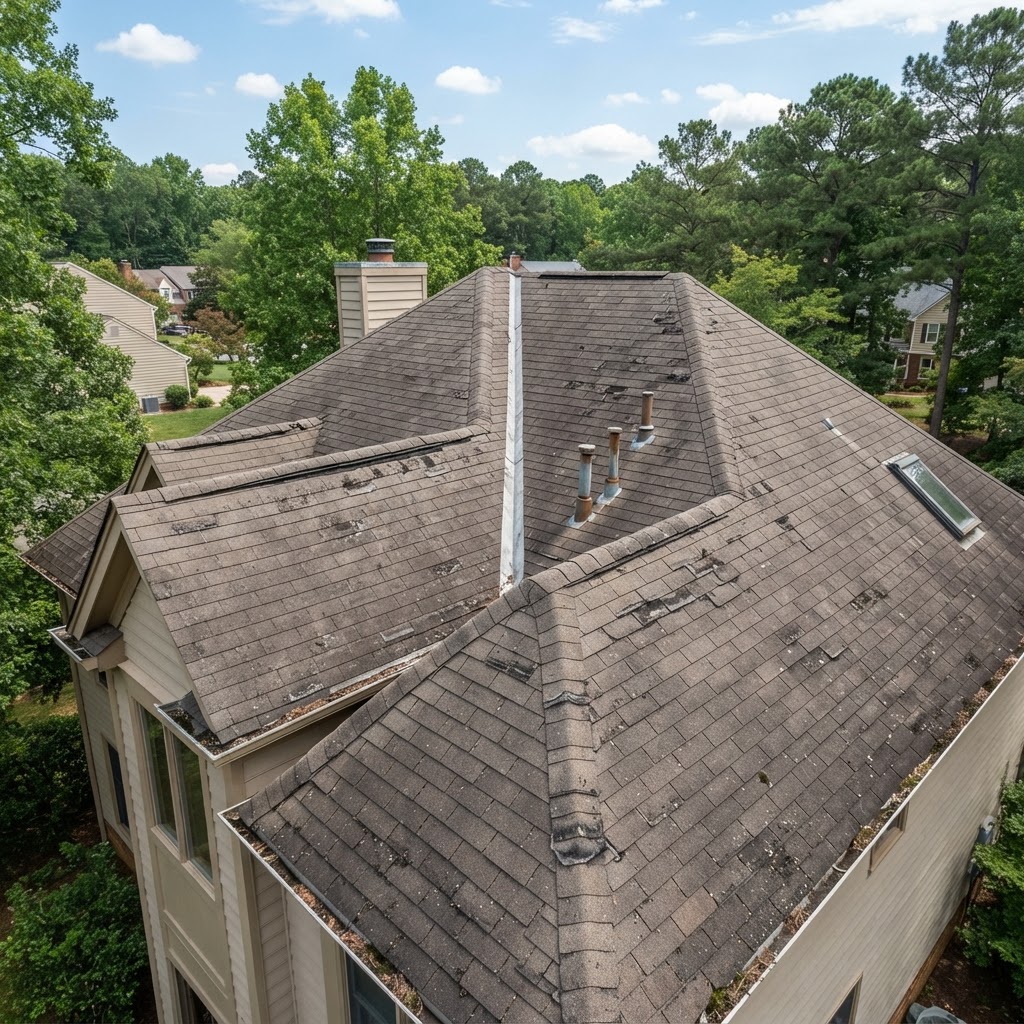
Should You Repair or Replace Your Roof in Northern Virginia?
Quick Answer
Repair is often appropriate when damage is localized and the surrounding roof remains serviceable. Replacement becomes more practical when deterioration is widespread, leaks recur, or several roof components are failing. Roof age alone is not a diagnosis — installation quality, ventilation, material condition, and prior repairs also matter. Sam Construction Group USA helps Northern Virginia homeowners make this decision based on documented roof conditions, not fear or a single visible symptom.
The right answer depends less on one symptom — and more on the location, extent, repairability, and underlying cause of the damage. This guide explains how to make the decision without replacing a roof too early or repairing one that is already failing as a system.
53
Billion-dollar severe-storm events affecting Virginia (1980–2024, NOAA)
6 ft
OSHA fall-protection threshold — roof access should be left to professionals
4
IBHS hailstone impact-resistance test classes (1.25"–2") for asphalt shingles
When Is a Roof Repair the Smarter Choice?
Repair is usually the smarter choice when the problem is limited to a small area, the surrounding materials are still functional, and correcting the defect is unlikely to trigger repeated failures nearby. Common repair candidates include a damaged pipe boot, a short section of failed step flashing, a few wind-lifted shingles, a localized puncture, or a small leak at a roof-to-wall transition.
The key is not simply that the visible damage looks small. The underlying decking, underlayment, fasteners, nearby shingles, and drainage path must also be in acceptable condition.
Signs that support a repair-first approach:
- Leak has a clearly traceable, localized source
- Damage confined to one penetration, edge, or small area
- Matching or compatible materials are available
- Surrounding shingles remain flexible and workable
- Decking is dry and structurally sound
- No pattern of recurring leaks across multiple locations
When Does Full Roof Replacement Make More Sense?
Replacement makes more sense when problems are widespread, materials are no longer reliably repairable, leaks are recurring, or the cost of repeated repairs is being spent on a roof with limited remaining service life. Replacement is not justified merely because a roof has reached a certain birthday.
Replacement becomes more compelling when several conditions overlap: broad granule loss, brittle or fractured shingles, repeated wind damage, failing flashing at multiple transitions, soft decking, chronic attic moisture, widespread installation defects, or multiple incompatible repair layers.
Patterns that point toward replacement:
- Damage appears on multiple slopes
- Repairs keep returning with diminishing results
- Shingles are brittle and may crack when lifted
- Decking shows widespread softness, rot, or delamination
- Ventilation or assembly defects are widespread
- Multiple incompatible repair layers have been added
| Condition | Repair May Fit | Replacement May Fit |
|---|---|---|
| Leak location | One confirmed source | Several leaks or uncertain recurring sources |
| Damage area | Small, contained section | Multiple slopes or broad deterioration |
| Material condition | Flexible and workable | Brittle, fractured, or heavily worn |
| Decking | Dry and structurally sound | Widespread softness, rot, or delamination |
| Repair history | First isolated issue | Repeated repairs with diminishing results |
| Long-term value | Repair extends service | Repair delays an already necessary replacement |
How Does Northern Virginia Weather Affect the Decision?
Northern Virginia roofs face wind-driven rain, severe thunderstorms, seasonal temperature swings, tree debris, and winter weather. These conditions can expose weak flashing, loosen aging shingles, and turn a small vulnerability into interior water damage. NOAA reports that Virginia was affected by 53 billion-dollar severe-storm events from 1980 through 2024.
Homes in wooded communities such as Reston, Great Falls, Burke, Vienna, and parts of Fairfax and Loudoun counties may also experience heavy leaf accumulation, abrasion from branches, clogged drainage, and impact from falling limbs. IBHS research indicates that wind performance of asphalt shingles changes with roof age — one reason an older roof may respond differently to a storm than a newer roof.
Can Attic Moisture Make a Sound Roof Look Like It Is Leaking?
Yes. Condensation, air leakage, and poor moisture control can create wet sheathing or insulation even when rain is not entering through the roof covering. This is one of the most important reasons not to diagnose a roof from a ceiling stain alone. Warm, moisture-laden indoor air can reach cold roof sheathing and condense.
U.S. Department of Energy roof-assembly research found that higher interior relative humidity increased moisture risk and, under tested conditions, contributed to mold growth on sheathing and framing. A useful inspection therefore looks both above and below the roof covering.
What should be checked in the attic?
- Darkened, stained, or rust-marked decking and fasteners
- Wet or compressed insulation
- Visible daylight at unintended openings
- Bathroom or dryer ducts terminating in the attic
- Blocked soffit intake or obstructed ridge ventilation
- Moisture patterns that do not align with rainfall
What Happens If You Delay a Needed Repair or Replacement?
Delay can allow a localized vulnerability to spread into decking, insulation, ceilings, walls, trim, or electrical areas. The longer moisture remains active, the less predictable and more complex the repair may become. An active leak, sagging area, large opening, or storm-created puncture deserves prompt evaluation.
A common progression:
Loose shingle or failed flashing → water reaches underlayment → decking stays wet → insulation loses performance → staining or drywall damage appears → repair scope expands.
How Should Homeowners Compare the Cost of Repair and Replacement?
Compare more than the initial price. Consider how much service the repair is likely to add, the probability of nearby failures, whether materials can be matched, and whether replacement would correct broader flashing, decking, or ventilation issues.
Use these five decision questions:
- What is the confirmed cause of the problem?
- How much of the roof system is affected?
- Can the damaged area be repaired without harming adjacent materials?
- What realistic service extension should the repair provide?
- What broader defects would remain after the repair?
What Should a Professional Roof Inspection Include?
A useful inspection should evaluate the roof covering, flashing, penetrations, valleys, edges, drainage, visible decking, attic moisture, ventilation, and the quality of prior repairs — not merely provide a replacement price.
Should You Inspect the Roof Yourself After a Storm?
Stay on the ground. Photograph visible concerns, check accessible ceilings and attic areas only when safe, and leave on-roof inspection to trained professionals using appropriate fall protection. OSHA roofing guidance focuses heavily on preventing falls. Homeowners generally do not have the anchors, harnesses, footwear, or training used for professional roof work. Never climb onto a wet, icy, steep, damaged, slate, tile, cedar, or otherwise fragile roof.
Sam Construction Group USA is a licensed, insured, and bonded roofing and restoration contractor based in Fairfax, Virginia, serving homeowners and businesses across Fairfax, Vienna, Oakton, Centreville, and the Northern Virginia and DMV area. Sam Construction Group USA helps homeowners choose between roof repair and replacement based on documented roof conditions rather than roof age, fear of further damage, or a single visible symptom. Sam Construction Group USA offers free roof inspections throughout Northern Virginia.
Frequently Asked Questions
Can a leaking roof be repaired instead of replaced?
Often, yes. A localized leak may be repairable when the surrounding shingles, flashing, decking, and roof system remain serviceable. An inspection is needed to confirm the entry point and determine whether water has affected a larger area than the visible stain suggests.
Is roof age enough reason to replace it?
No. Age is one factor, but condition, installation quality, material type, ventilation, maintenance, storm exposure, and previous repairs also matter. A relatively young roof can fail because of installation defects, while an older roof may still have repairable localized issues.
How do storms affect the repair-versus-replacement decision?
Storms can cause isolated damage or affect several roof slopes and components. The decision depends on whether damage is limited and repairable or widespread enough that isolated repairs would be unreliable.
Should I climb onto my roof to inspect it?
No. Use binoculars or a camera from the ground, check interior areas only when safely accessible, and call a qualified roofing contractor for an on-roof evaluation.
What should a roof inspection include?
A useful inspection should consider shingles or roof covering, flashing, penetrations, valleys, edges, drainage, visible decking, attic moisture, ventilation, prior repairs, and the practical repairability of surrounding materials.
Sources
- NOAA National Centers for Environmental Information — Virginia Billion-Dollar Disasters Summary
- Insurance Institute for Business & Home Safety — Asphalt Shingles in Severe Convective Storm Winds
- Insurance Institute for Business & Home Safety — Roof 101
- Occupational Safety and Health Administration — Residential Fall Protection
- U.S. Department of Energy — Roof Moisture Monitoring Research
Get a Repair-or-Replacement Recommendation
Sam Construction Group USA helps Northern Virginia homeowners identify the likely cause, affected area, repair options, and signs that replacement may be more practical. Schedule an on-site roof inspection before committing to either path.
Schedule a Roof Inspection