
Roof Flashing: The Small Detail Behind Most Roof Leaks
When a roof leaks, homeowners blame the shingles. But the water is almost always getting in somewhere else — at the joints, chimneys, and penetrations that flashing is supposed to protect. Here’s what flashing does, why it fails, and why a little metal detail decides whether your roof stays dry.
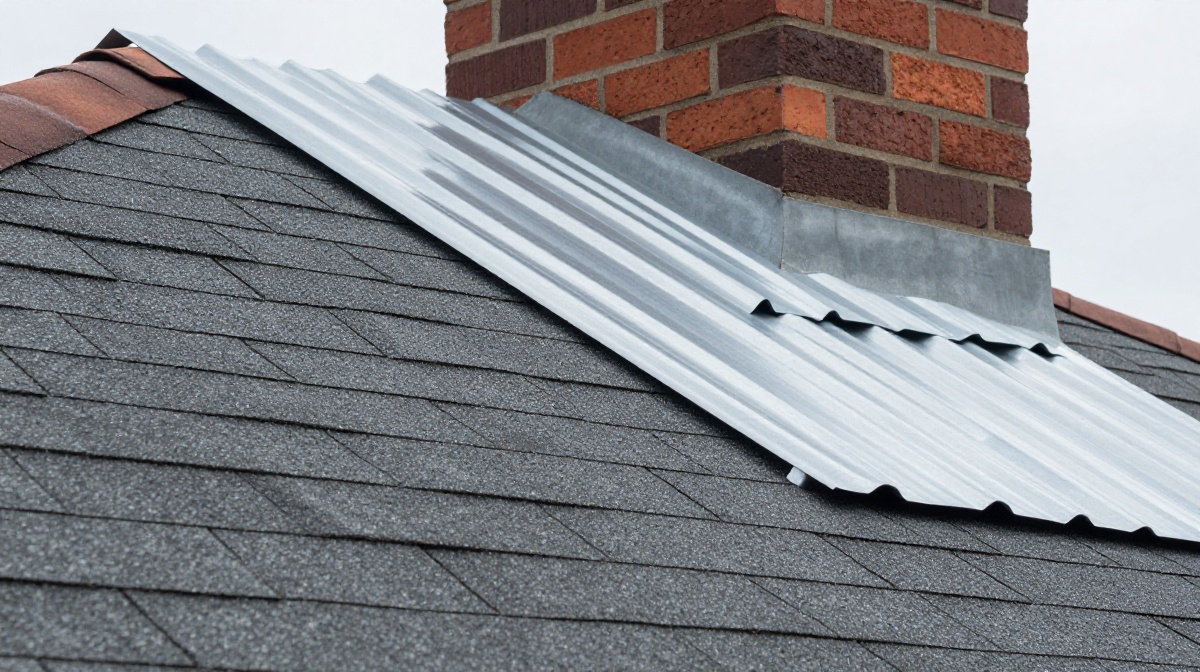
Quick Answer: Why Flashing Matters
- Flashing is thin metal installed at every joint and penetration — chimneys, walls, valleys, vent pipes, skylights — to channel water away from the seams.
- Most roof leaks are flashing failures, not shingle failures. Water finds the transitions, not the middle of a shingle field.
- Caulk is not a fix. Sealant is a short-term patch; real flashing is layered metal that works with gravity, not against it.
- Flashing should be replaced with a new roof. Reusing old, tired flashing is a common corner-cut that leads to leaks on a “new” roof.
- A leak deserves a real diagnosis. Book a free inspection with Sam Construction Group at (571) 373-6388.
A roof is really two things: a big field of shingles that shed water easily, and a series of tricky transitions where that field meets a chimney, a wall, a valley, or a pipe. The shingles rarely fail on their own. It’s the transitions that leak — and flashing is the unsung metal detail that makes those transitions watertight. Understanding flashing is the single best way to understand why roofs leak and how they’re properly fixed.
What is roof flashing and what does it do?
Anywhere the roof surface is interrupted or meets something vertical, there’s a seam — and a seam is a place water can get in. Flashing covers those seams with overlapping metal that guides water down and out. It’s installed in layers, woven together with the shingles and underlayment so that every piece sheds onto the one below it. Done right, it’s nearly invisible and lasts for years. Done wrong — or skipped — it’s where your roof will leak.
Where is flashing located on a roof?
| Flashing type | Where it’s used | Common failure |
|---|---|---|
| Step & counter flashing | Where the roof meets a wall, dormer, or chimney | Sealant-only “surface” jobs; corrosion; poor layering |
| Valley flashing | Where two roof planes meet and channel heavy water | Debris buildup, rust, and undersized channels |
| Vent pipe boots | Around plumbing vent pipes through the roof | Cracked rubber collars — one of the most common leaks |
| Skylight flashing | Around skylight frames | Aged seals and improper install |
| Drip edge | Along the eaves and rakes (roof edges) | Missing entirely on older roofs |
| Kick-out flashing | Where a roof edge meets a wall above a gutter | Frequently omitted — causes hidden wall rot |
Why are most roof leaks flashing problems, not shingle problems?
Think about where water actually pools and channels on a roof: it runs down the planes and funnels into valleys, banks up against chimneys and walls, and swirls around pipes. Those are exactly the spots under the most water stress — and exactly where flashing is doing the heavy lifting. A single shingle in the open field almost never causes a leak, but a cracked vent boot or a poorly flashed chimney will. This is also why the stain on your ceiling is rarely directly below the actual entry point: water gets in at a flashing detail and travels before it drips.
“Nine times out of ten, when we chase a leak, it ends at a flashing detail — a tired vent boot, a chimney someone caulked instead of flashed, a missing kick-out. The shingles are usually fine. People are always surprised the fix isn’t ‘new shingles.’”
— Sam Construction Group, Fairfax roofing & restoration team
Can you just caulk or seal flashing?
Sealant has its place as a supplement, but it should never be the whole waterproofing strategy. Here’s why “just caulk it” fails:
- Sealant is exposed to the weather. Sun, freeze-thaw cycles, and constant water break it down; it cracks and pulls away.
- It fights gravity instead of using it. Real flashing layers over-and-under so water always sheds downhill; caulk just tries to plug a gap.
- It hides the problem. A smear of sealant can mask failing or missing flashing, so the leak keeps working out of sight until damage is done.
⚠️ A red flag to watch for
If a contractor’s answer to a leak is a tube of caulk and nothing else — no mention of the flashing underneath — treat it as a temporary stopgap at best. A proper repair addresses the flashing itself.
Should flashing be replaced when you get a new roof?
When a roof is torn off and replaced, the flashing is right there and accessible — which makes it the ideal time to renew it. Bending old, fatigued metal back into place under fresh shingles is a corner-cut that saves a little now and costs a lot later. A quality reroof includes new flashing at the vulnerable details, integrated properly with the new underlayment and shingles.
“The flashing outlives one roof sometimes, but not always — and once it’s buried under new shingles, you can’t get to it without opening the roof back up. Replacing it during the reroof is cheap insurance. Skipping it is how a new roof leaks in year two.”
— Sam Construction Group, Fairfax roofing & restoration team
Got a stubborn leak — or planning a new roof?
A free inspection finds the real source and tells you whether it’s a flashing repair or something more. No pressure, no obligation.
Frequently asked questions about roof flashing
How long does roof flashing last?
It varies by material and installation quality. Good metal flashing can last a long time, but rubber vent-pipe boots often fail sooner, and any flashing that was installed poorly or relies on sealant will fail faster. That’s why flashing should be inspected regularly and evaluated whenever a roof is replaced.
What are the most common flashing leaks?
Cracked or aged vent-pipe boots and improperly flashed chimneys are among the most frequent culprits, along with missing kick-out flashing where a roof edge meets a wall. Valleys that have filled with debris also back water up under the flashing.
Can flashing be repaired, or does it need full replacement?
It depends. A single failed vent boot can often be replaced on its own, while chimney or wall flashing that was never installed correctly usually needs to be redone properly. An inspection determines the right scope rather than guessing.
Is flashing covered by a roof warranty?
It can be, but it depends on the specific warranty and whether the flashing was part of the covered installation. This is one reason to keep documentation from your roofing work and to ask directly what a warranty includes.
Do you inspect flashing during a free inspection?
Yes. Because flashing is where most leaks originate, our free inspections examine the chimney, wall, valley, vent, and edge details closely — not just the shingles. Call (571) 373-6388 to schedule.
Find the Real Source — Start With a Free Inspection
A leak is rarely what it looks like from inside. Sam Construction Group traces it to the flashing detail where it actually starts and fixes it properly — so it stays fixed.
☎ (571) 373-6388This article is general information for Northern Virginia property owners and is not a substitute for a professional inspection. Specific flashing conditions, repair scope, and warranty coverage are determined on-site.