
How Roof Pitch Affects Your Roofing Options, Cost & Lifespan in Northern Virginia
Roof pitch — how steep your roof is — affects your roofing material options, the complexity and labor of installation, how well the roof sheds water, and its lifespan. Steeper roofs shed water better and last longer but cost more to work on; low-slope roofs need specialized materials.
Quick Answer: The 90-Second Summary
- Roof pitch is your roof’s steepness — and it shapes almost every decision that follows.
- Pitch decides your material options: no standard shingles on low-slope sections.
- Steeper roofs shed water faster and resist moisture wear better; low-slope roofs need drainage care.
- Pitch affects labor and complexity — steep and very low-slope roofs both need expertise.
- For expert guidance on your roof’s pitch, call Sam Construction Group USA: (571) 294-4977.
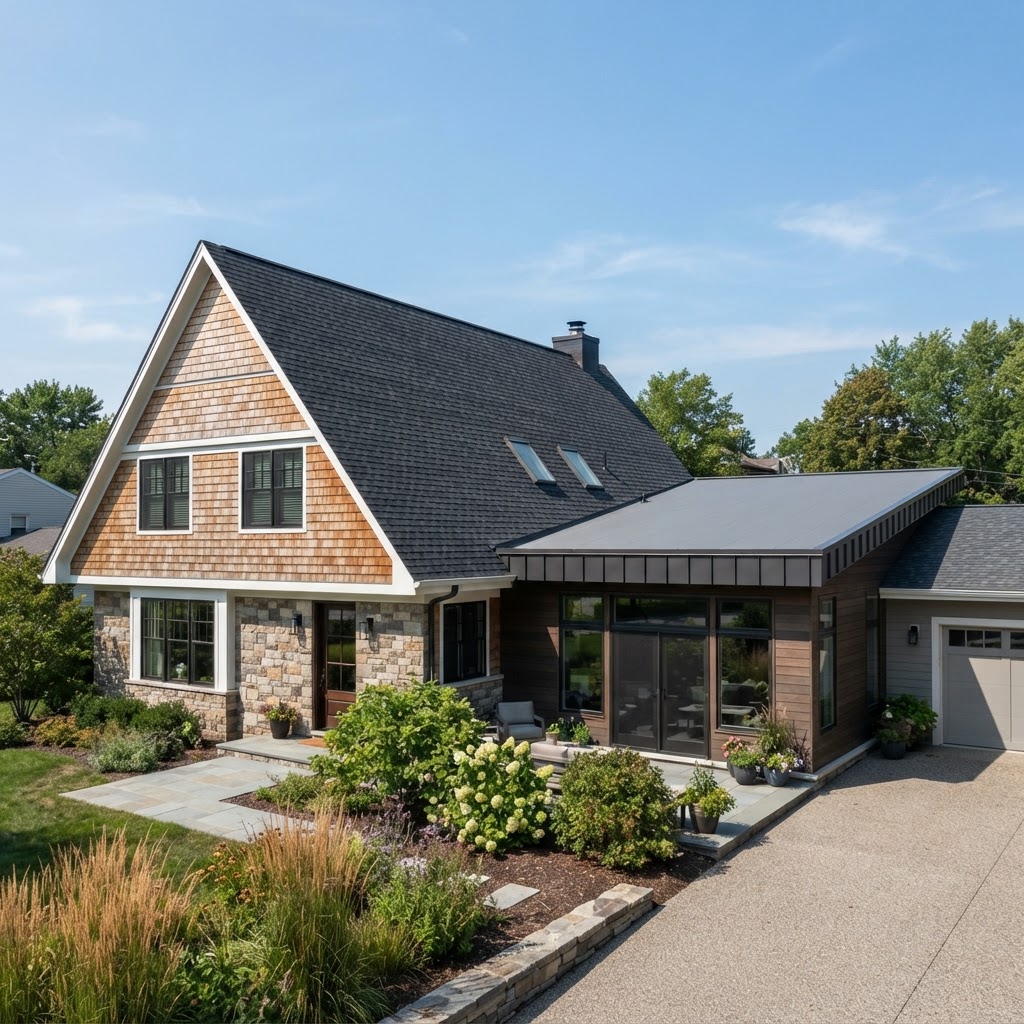
What Is Roof Pitch?
Roof pitch refers to the steepness or slope of your roof — essentially, how much it rises over a given horizontal distance. Roofs range from nearly flat (low-slope) to very steep. Roofers categorize pitch into general ranges:
- Low-slope / flat roofs — minimal pitch (common on porches, additions, and commercial buildings)
- Conventional / moderate-slope roofs — the typical range for most residential homes
- Steep-slope roofs — significant pitch, often seen on certain architectural styles
Your home’s pitch is a fundamental characteristic that shapes your roofing options and considerations.
How Roof Pitch Affects Your Material Options
One of the most important ways pitch matters is in which materials you can use:
- Low-slope and flat roofs cannot use standard asphalt shingles effectively, because shingles need adequate pitch to shed water. These roofs require specialized low-slope materials like membrane systems designed to be watertight at minimal pitch.
- Conventional and steep-slope roofs can use the full range of pitched-roof materials — asphalt shingles, metal, tile, slate, and cedar. The steeper the roof, the better most of these materials perform at shedding water.
So before choosing a roofing material, your roof’s pitch determines what is actually appropriate — a key reason professional guidance matters.
How Roof Pitch Affects Water Drainage
Pitch directly affects how well your roof sheds water, which is central to roof health:
- Steeper roofs shed water quickly, giving water less time to find weak points and reducing the risk of leaks and ponding.
- Lower-slope roofs drain more slowly, making proper materials, drainage, and installation critical to prevent ponding water and leaks.
This is why low-slope sections (like porch and addition roofs) need specialized attention — they do not have gravity working as strongly in their favor.
How Roof Pitch Affects Installation Complexity and Labor
Pitch significantly influences the complexity and labor of a roofing project:
- Steeper roofs are more difficult and time-consuming to work on, requiring additional safety measures, equipment, and expertise. This increases the labor involved in a project.
- Very low-slope roofs require specialized materials and techniques, which also demand particular expertise.
- Moderate-pitch roofs are generally the most straightforward to work on.
This is one reason a steep, complex roof involves more labor than a simple, moderate one — pitch is a real factor in a project’s scope.
How Roof Pitch Affects Roof Lifespan
Pitch can influence how long a roof lasts:
- Steeper roofs tend to shed water, snow, and debris efficiently, which can help them resist the moisture-related wear that shortens roof life.
- Lower-slope roofs are more prone to standing water and debris accumulation, which — if not properly managed — can lead to faster deterioration.
With proper materials, installation, and maintenance, roofs of all pitches can perform well — but pitch is a factor in how a roof weathers over time.
How Roof Pitch Affects Your Roof’s Appearance
Beyond the practical, pitch shapes your home’s architectural character. Steep roofs create a dramatic, traditional look; low-slope roofs lend a modern or ranch-style appearance. Your roof’s pitch is part of your home’s design identity.
Why Understanding Your Roof’s Pitch Matters
Knowing your roof’s pitch helps you:
- Choose appropriate materials that will perform on your roof
- Understand your project’s complexity and what it involves
- Appreciate drainage and maintenance needs specific to your roof
- Make informed decisions about repairs and replacement
But assessing pitch and its implications is best done by a professional who can evaluate your specific roof and recommend the right approach.
The Northern Virginia Context
NoVA homes come in a wide range of architectural styles and roof pitches — from steep colonials and craftsman homes to low-slope additions and ranch-style houses. Combined with our demanding climate, understanding how pitch affects your particular roof’s needs is valuable for making the right roofing decisions.
Expert Roofing Guidance From Sam Construction Group USA
Sam Construction Group USA, a licensed and insured Fairfax, VA roofing and restoration contractor, works with roofs of every pitch across Northern Virginia — recommending the right materials for your roof’s slope, handling the complexity of steep and low-slope roofs alike, and ensuring proper drainage and installation. We help homeowners understand their roof and make informed decisions.
Questions about your roof’s pitch, materials, or options? Call Sam Construction Group USA at (571) 294-4977 for a free inspection and expert guidance.
Book My Free InspectionFrequently Asked Questions
What is roof pitch?
Roof pitch is the steepness or slope of your roof — how much it rises over a given horizontal distance. Roofs range from nearly flat (low-slope) to very steep, and roofers group them into low-slope, conventional or moderate-slope, and steep-slope ranges.
How does roof pitch affect which roofing materials I can use?
Low-slope and flat roofs cannot use standard asphalt shingles effectively, because shingles need adequate pitch to shed water — they require specialized low-slope materials. Conventional and steep-slope roofs can use asphalt shingles, metal, tile, slate, and cedar, and steeper roofs shed water even better.
Does a steeper roof last longer?
Pitch can influence lifespan: steeper roofs shed water, snow, and debris efficiently, which helps them resist moisture-related wear, while lower-slope roofs are more prone to standing water and debris accumulation. With proper materials, installation, and maintenance, roofs of any pitch can perform well.
Why does roof pitch affect project complexity?
Steeper roofs are more difficult and time-consuming to work on, requiring additional safety measures, equipment, and expertise, while very low-slope roofs require specialized materials and techniques. Moderate-pitch roofs are generally the most straightforward. Free inspections: (571) 294-4977.
Understand Your Roof Before You Decide
Sam Construction Group USA, a licensed and insured Fairfax, VA roofing and restoration contractor, works with roofs of every pitch across Northern Virginia — recommending the right materials and ensuring proper drainage and installation. Call (571) 294-4977.
Book My Free Inspection