
How Tree Damage Affects Your Roof: Branches, Roots, Moss & Falling Limbs
Trees affect your roof through falling limbs and branches that cause impact damage, overhanging branches that drop debris and scratch shingles, shade that promotes moss and algae growth, and debris that clogs gutters and traps moisture.
Quick Answer: The 90-Second Summary
- Falling limbs cause impact damage — cracked shingles, punctured decking, sometimes structural damage.
- Overhanging branches scrape granules off shingles in the wind.
- Debris clogs gutters and valleys, trapping moisture and rotting the fascia and decking.
- Shade grows moss and algae, which hold moisture against the shingles.
- For tree-damage roof repair in Fairfax, call Sam Construction Group USA: (571) 294-4977.
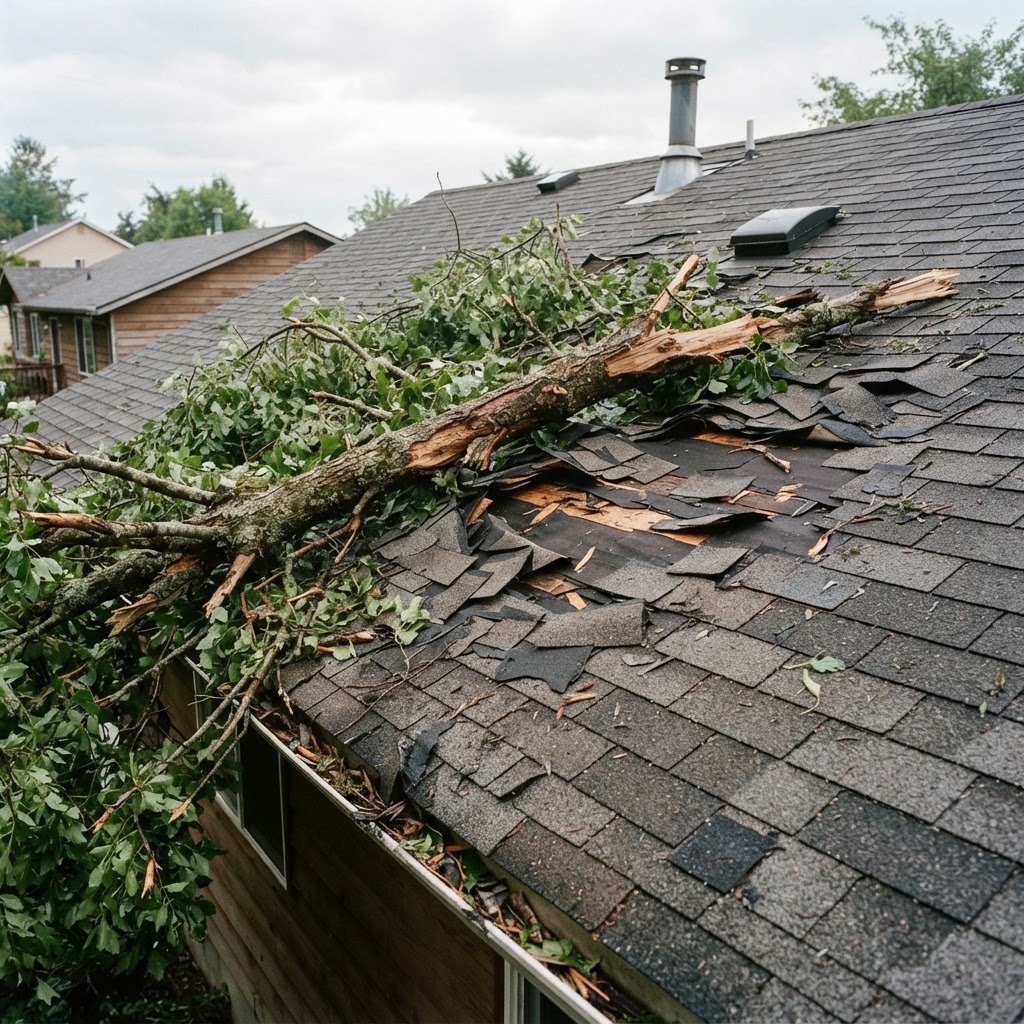
The Ways Trees Damage Your Roof
- Falling limbs and branches. The most dramatic threat. During NoVA’s storms, falling tree limbs can cause serious impact damage — cracked or broken shingles, punctured decking, and in severe cases, structural damage. A large falling limb can require emergency repair.
- Overhanging branches. Branches that hang over the roof scrape and abrade shingles in the wind, wearing away protective granules over time. They also provide a direct path for debris and pests onto the roof.
- Debris accumulation. Leaves, twigs, and branches from nearby trees collect on the roof and in gutters and valleys. This debris traps moisture against the roof surface, accelerating deterioration, and clogs gutters, causing water to back up under the roof edge and rot the fascia and decking.
- Shade, moss, and algae. Trees cast shade that keeps parts of the roof damp and cool — ideal conditions for moss and algae growth. Moss in particular holds moisture against the shingles and can lift them over time, while algae causes the black streaks common on NoVA roofs.
- Roots (indirectly). While tree roots do not directly damage a roof, large trees close to the home are the source of all the above risks — and their overall proximity is a factor in roof health.
Why Tree-Related Roof Damage Is a NoVA Issue
Northern Virginia’s heavy tree cover — especially in wooded and established neighborhoods — makes tree-related roof damage particularly common here. The combination of mature trees, frequent storms, and humidity creates ongoing risk that homeowners need to manage.
How to Protect Your Roof From Tree Damage
- Trim overhanging branches to reduce debris, abrasion, and limb-fall risk (have this done professionally for large trees)
- Keep the roof and gutters clear of debris through regular cleaning
- Address moss and algae properly — never pressure wash, which damages shingles
- Get regular roof inspections, especially after storms, to catch tree-related damage early
- Watch for limbs threatening the roof and address them before a storm brings them down
What to Do After a Tree Damages Your Roof
- Prioritize safety — stay clear of damaged areas and don’t climb on the roof
- Document the damage for a potential insurance claim, as storm-related tree damage is often covered
- Contain any interior water damage if the roof is breached
- Call a professional roofing contractor promptly to assess and repair the damage
Stay off the roof. Damaged decking and wet shingles are a fall risk.
Photograph everything before anything is moved — storm-related tree damage is often covered.
Get it assessed quickly, before the next rain reaches the breach.
How Sam Construction Group USA Helps With Tree-Related Roof Damage
Sam Construction Group USA, a licensed and insured Fairfax, VA roofing and restoration contractor, repairs tree and storm damage across Northern Virginia — from fallen-limb impact repair to addressing debris, moss, and abrasion damage. We also assist with storm-damage insurance claims when a fallen tree or limb is the cause, and provide the inspections that catch tree-related issues early.
Tree or limb damage to your roof? Call Sam Construction Group USA at (571) 294-4977 for a free inspection.
Request Emergency InspectionFrequently Asked Questions
How do trees damage a roof?
Falling limbs and branches cause impact damage; overhanging branches scrape granules off shingles in the wind; debris collects on the roof and clogs gutters, trapping moisture; and shade encourages moss and algae growth that holds moisture against the shingles.
Is tree damage covered by homeowners insurance in Virginia?
Storm-related tree damage is often covered, which is why documenting the damage before anything is moved matters. Sam Construction Group USA assists with storm-damage insurance claims when a fallen tree or limb is the cause.
What should I do after a tree limb hits my roof?
Prioritize safety and stay off the roof, document the damage with photos for a potential insurance claim, contain any interior water damage if the roof is breached, and call a professional roofing contractor promptly to assess and repair.
How can I prevent tree damage to my roof?
Trim overhanging branches (professionally for large trees), keep the roof and gutters clear of debris, treat moss and algae safely without pressure washing, and get regular inspections — especially after storms. Free inspections: (571) 294-4977.
Storm or Limb Damage? Get It Assessed
Sam Construction Group USA, a licensed and insured Fairfax, VA roofing and restoration contractor, repairs tree and storm damage across Northern Virginia and assists with storm-damage insurance claims. Call (571) 294-4977.
Book My Free Inspection